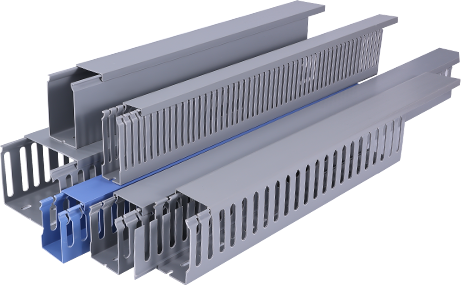
In modern electrical systems, power distribution panels serve as the central hub that routes regulated electricity to various circuits across commercial, industrial, and residential facilities. Among the many components that keep these panels functioning safely and efficiently, wiring duct for power distribution panels plays a critical yet often underrecognized role. Designed to organize, protect, and route electrical wires and cables within the panel enclosure, wiring duct eliminates the chaos of loose wires, reduces safety hazards, and streamlines maintenance work for electricians and facility managers. As electrical systems grow more complex with increasing power demands and additional control circuits, the importance of high-quality wiring duct has become more pronounced than ever, making it essential for industry professionals to understand its core functions, selection criteria, and installation best practices.
First, it is important to clarify the core functions that wiring duct serves in power distribution panels. Unlike basic cable ties or open wire routing, wiring duct creates dedicated, separated channels for different types of wiring, such as power cables, control signal wires, and communication lines. This separation prevents cross-interference between power circuits and low-voltage signal lines, which can disrupt sensitive control equipment like PLCs or sensor systems. Additionally, wiring duct provides physical protection for wire insulation, preventing abrasion from sharp metal edges of the panel enclosure or other components that could cause insulation damage and lead to short circuits or electrical fires. It also keeps the panel interior neat and organized, which drastically reduces the time required for troubleshooting, upgrades, or repairs. When an electrician needs to identify a specific circuit or add a new wire, a well-organized wiring duct system allows them to locate and access wires quickly without sorting through a tangled mass of cables.
Secondly, the selection of the right wiring duct for power distribution panels depends on several key factors that match the specific requirements of the application. The most fundamental consideration is material, as wiring duct is typically manufactured from either PVC, ABS, or rigid polycarbonate. PVC wiring duct is the most common choice for general-purpose applications, offering good electrical insulation, low cost, and resistance to moisture and common chemicals. ABS wiring duct provides higher impact strength, making it ideal for panels that may be subjected to vibration or physical movement, such as those used in heavy industrial machinery. Rigid polycarbonate wiring duct offers superior heat resistance and flame retardancy, making it suitable for high-power distribution panels that operate at elevated temperatures, where it can maintain structural integrity without warping or releasing toxic fumes. Another key selection factor is size: the width and depth of the duct slots must be chosen to accommodate the total number and gauge of wires that will be routed through it, with enough extra space allowed for future expansions. Finger duct, the most common style of wiring duct for panels, has evenly spaced open slots along its sides that allow wires to exit at any point, making it highly flexible for various panel layouts.
In addition to material and size selection, proper installation of wiring duct for power distribution panels is critical to maximizing its performance and safety. Many installers make the mistake of overfilling wiring ducts, packing too many wires into a single channel which restricts airflow, increases heat buildup, and makes it difficult to add or remove wires later. A general industry best practice is to fill the duct to no more than 60 to 70 percent of its total capacity, leaving enough empty space for heat dissipation and future modifications. It is also important to mount the wiring duct securely to the panel interior using appropriate fasteners, ensuring it does not shift or loosen when wires are pulled or adjusted. Separating high-voltage power wires from low-voltage control and communication wires in different duct runs is another key installation rule, as this prevents electrical interference and reduces the risk of accidental contact between high and low voltage circuits during maintenance. Installers should also trim duct ends smoothly and remove any sharp burrs after cutting, which can damage wire insulation over time.
Furthermore, the long-term benefits of investing in high-quality wiring duct for power distribution panels extend far beyond initial organization. A properly installed wiring duct system improves the overall safety of the power distribution system by reducing the risk of arc faults and electrical fires caused by damaged insulation or loose wires. It also extends the service life of the entire panel by reducing heat buildup, which can degrade electrical components like circuit breakers and contactors over time. For facility managers, this translates to lower long-term maintenance costs and fewer unplanned downtime events, as troubleshooting and repairs can be completed much faster when wires are well-organized. Many modern wiring duct products also come with innovative features like adhesive backing for quick installation, color-coding options for easy circuit identification, and UV resistance for outdoor panel applications, adding extra value for different use cases.
In conclusion, wiring duct for power distribution panels is a small but essential component that has a major impact on the safety, efficiency, and maintainability of any electrical power distribution system. By understanding its core functions, carefully selecting the right material and size for the application, and following proven installation best practices, electrical designers and installers can create power distribution panels that are safe, reliable, and easy to modify over their service life. As electrical systems continue to grow more complex with the adoption of smart building technology and higher power demands, the role of high-quality wiring duct will only become more important. Investing time and resources into choosing and installing the right wiring duct pays off long-term through improved safety, reduced maintenance costs, and greater flexibility for future system upgrades.