A General-purpose relay (GPR) is a versatile electrical component widely used in various industrial, commercial, and residential applications. Its primary function is to switch electrical circuits on and off using a low-power control signal to manage higher-power devices. The simplicity, reliability, and flexibility of GPRs make them indispensable in many control systems. In this article, we’ll explore the working principle, applications, and advantages of general-purpose relays, and why they are an essential component in modern electrical systems.
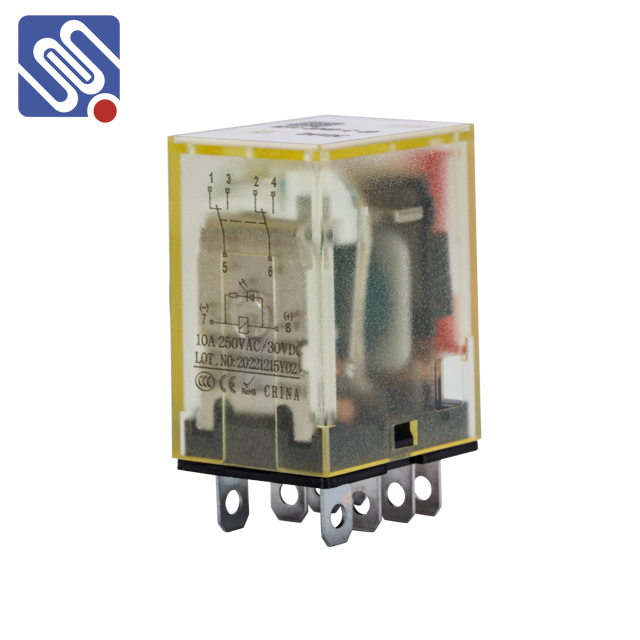
Working Principle of General-purpose Relay A general-purpose relay works on the basic principle of electromagnetism. It consists of several key components: a coil, contacts, an iron core, and a spring. When a small current flows through the coil, it generates a magnetic field, which attracts the iron core. This movement activates the contacts, either closing or opening the circuit. The relay typically includes two types of contacts: Normally Open (NO): These contacts are open when the relay is not energized, and they close when the relay is activated. Normally Closed (NC): These contacts are closed when the relay is de-energized and open when the relay is energized.