Latching relays are an essential component in power systems, offering unique benefits that enhance operational efficiency, reliability, and control. These relays are widely used in various industries, especially in scenarios where power conservation, state retention, and remote control are crucial. This article delves into the working principle, advantages, and applications of latching relays in power systems, shedding light on why they are an invaluable tool in modern electrical systems.
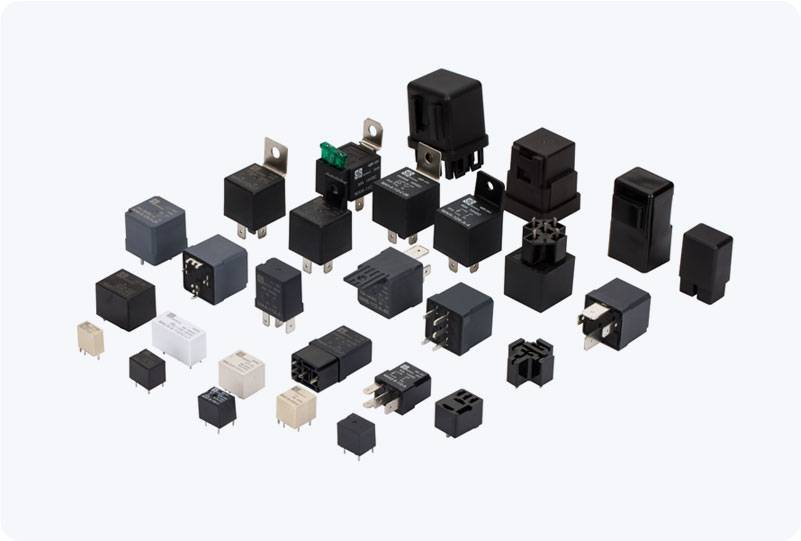
What is a Latching Relay? A latching relay, also known as a bistable or self-holding relay, is a type of relay that remains in its last set state (either open or closed) without requiring continuous power to maintain that state. Unlike traditional relays, which require a constant current to remain energized, a latching relay only needs a momentary pulse to switch its contacts, and it retains that position even after the pulse ceases. This makes it particularly useful in power systems, where energy conservation is a priority and continuous operation of relays is not always necessary. Latching relays typically feature two stable states: one where the contacts are closed and another where they are open. They are usually controlled by two types of pulses: a set pulse to close the contacts and a reset pulse to open them. These pulses are applied to either separate coils (in the case of a dual-coil latching relay) or to a single coil that alternates its state with each pulse (in the case of a single-coil latching relay).