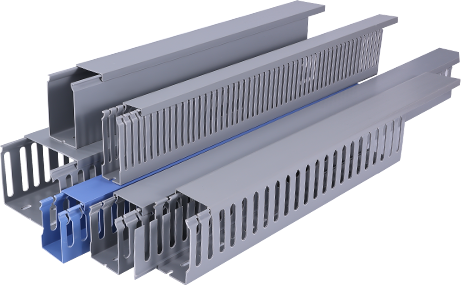
In industrial sectors ranging from oil and gas refining to chemical manufacturing, and even grain processing facilities, the risk of explosive gas mixtures and combustible dust accumulation is a constant threat to operational safety and personnel life. Among all the protective infrastructure designed to mitigate these hazards, Explosion-proof Wiring Duct stands out as a critical yet often underrecognized component that safeguards electrical systems and prevents catastrophic ignition events. Unlike standard wiring enclosures that offer basic mechanical protection, this specialized product is engineered to contain internal explosions, prevent flame propagation to surrounding hazardous atmospheres, and maintain structural integrity under extreme pressure, making it an indispensable safety requirement for any facility classified as a hazardous location. Understanding its design principles, compliance standards, and practical benefits is key for facility managers and safety engineers to build robust hazard mitigation systems.
First, it is necessary to clarify the core functional requirements that distinguish Explosion-proof Wiring Duct from ordinary wiring products. In hazardous environments, even a minor electrical spark or arc from a loose connection can trigger a widespread explosion if it contacts flammable gas or suspended dust. The primary design goal of explosion-proof wiring ducts is not just to protect wires from physical damage, but to create a contained enclosure that can withstand the pressure of an internal explosion, and prevent flames or hot gases from escaping into the surrounding atmosphere. This is achieved through precision-engineered joint gaps and flame paths that cool hot gases below the ignition temperature of external hazardous mixtures before they can exit the duct. Unlike intrinsically safe systems that limit electrical energy to prevent sparks, explosion-proof ducts operate on the principle of containing ignition, making them suitable for high-power electrical systems that cannot operate under strict energy limitations.
Secondly, compliance with global safety standards is non-negotiable for qualified Explosion-proof Wiring Duct, as non-compliant products can create hidden risks that lead to serious accidents. In North America, products must meet the requirements of NEC Article 500, which outlines classification standards for hazardous locations and specific construction requirements for explosion-proof enclosures. In the European Union, the ATEX directive sets mandatory testing and certification rules for equipment used in explosive atmospheres, requiring manufacturers to prove that their wiring ducts can withstand specified explosion pressures and maintain flame-proof properties over long-term use. Most Asian and Middle Eastern countries also adopt these international standards as the basis for facility safety inspections, meaning uncertified products can lead to failed inspections, operational shutdowns, and legal liabilities. When selecting products, facility managers must verify not just the material certification, but also the rated explosion class, group, and temperature class that matches the specific hazard type of their facility, for example, ducts designed for Group B hydrogen hazard require narrower flame paths than those designed for Group D propane.
Additionally, material selection and installation practices play a critical role in ensuring the long-term safety performance of Explosion-proof Wiring Duct. Most high-quality ducts are manufactured from thick-walled carbon steel or stainless steel, which provides the structural strength needed to contain internal explosion pressures. For corrosive environments such as offshore oil platforms or chemical processing plants, 316 stainless steel with anti-corrosion coatings is often required to prevent rust degradation that could weaken the duct structure over time. Installation practices also directly affect safety performance: all joint gaps must be maintained within the specified range outlined in the product certification, too large of a gap allows flames to escape, while too small of a gap can lead to thermal stress cracking during temperature fluctuations. It is also critical to ensure proper grounding of the entire wiring duct system to prevent static electricity accumulation, which can create an ignition source even within the explosion-proof enclosure.
Furthermore, modern innovations in Explosion-proof Wiring Duct design have improved both safety and practicality for end users. Traditional heavy steel ducts require complex on-site cutting and threading, which increases installation time and labor costs. Newer pre-fabricated modular designs with certified explosion-proof joint connections allow for faster installation while maintaining compliance, reducing construction downtime for new facilities or retrofit projects. Some manufacturers also offer composite explosion-proof ducts that combine flame-retardant reinforced polymers with metal reinforcement, offering lightweight corrosion resistance suitable for small to medium power applications in highly corrosive environments. These innovations have made explosion-proof wiring solutions more accessible for small-scale facilities such as local chemical storage warehouses and remote oil extraction sites, which previously struggled with the high cost and complexity of installing traditional steel ducts.
Finally, investing in high-quality certified Explosion-proof Wiring Duct is not just a regulatory requirement, but a long-term investment that reduces operational risk and total cost of ownership. Many facility managers make the mistake of prioritizing upfront cost savings by purchasing uncertified or low-quality products, but these products often degrade quickly, require frequent maintenance, and carry the constant risk of catastrophic accidents that can lead to loss of life, facility destruction, and permanent operational closure. By selecting properly certified products from reputable manufacturers and following professional installation and maintenance practices, facilities can ensure long-term compliance, reduce insurance premiums, and protect both personnel and assets. As industrial safety regulations become stricter globally, and more facilities recognize the value of proactive hazard mitigation, the demand for high-quality explosion-proof wiring ducts will continue to grow, driving further innovation in design and manufacturing. For any operation in a hazardous location, prioritizing this critical safety infrastructure is one of the most impactful steps to build a safe, sustainable, and compliant operation.