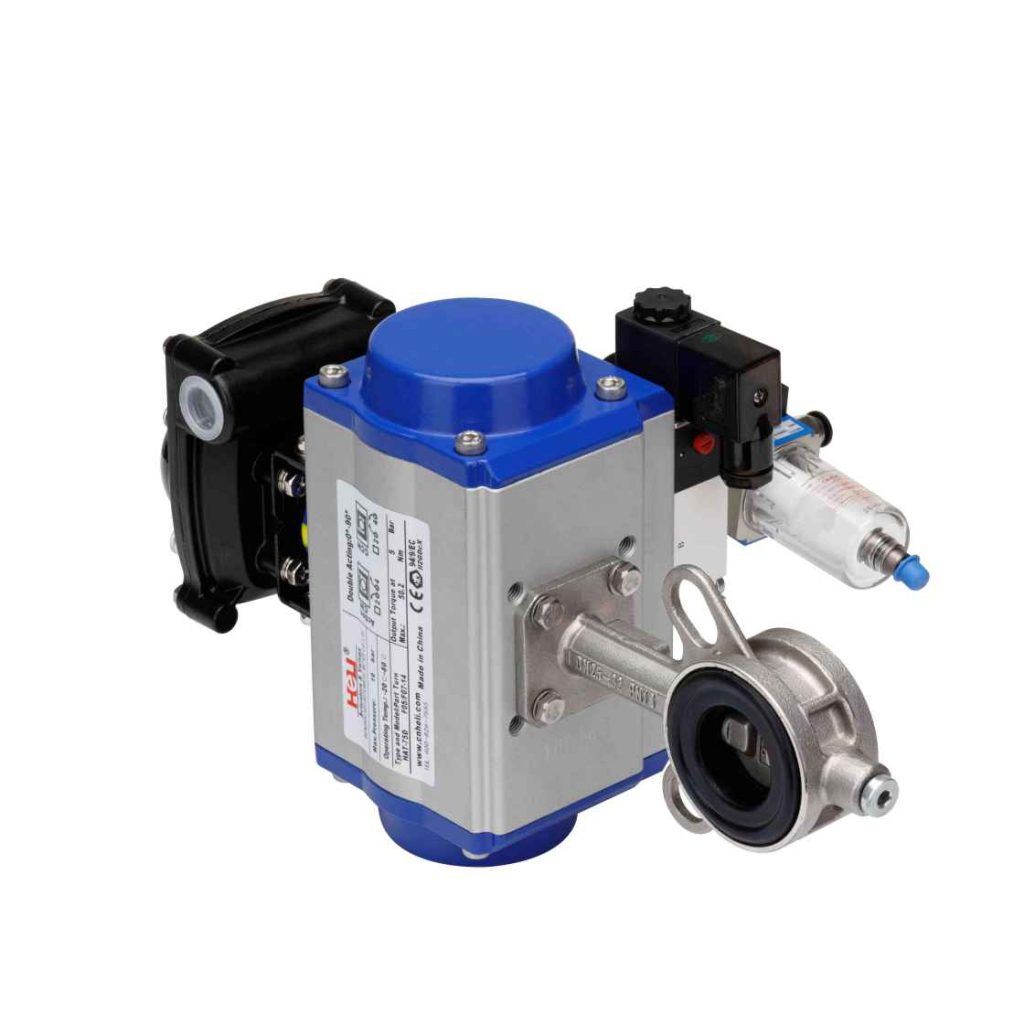
A pneumatic butterfly valve is an integral part of modern fluid control systems, playing a crucial role in regulating the flow of gases, liquids, and slurries in various industries. This valve combines the functionality of a butterfly valve with the power of pneumatic control, making it an ideal solution for precise flow regulation in both on/off and modulating applications. In this article, we will explore the design, functionality, advantages, applications, and maintenance considerations of pneumatic butterfly valves.
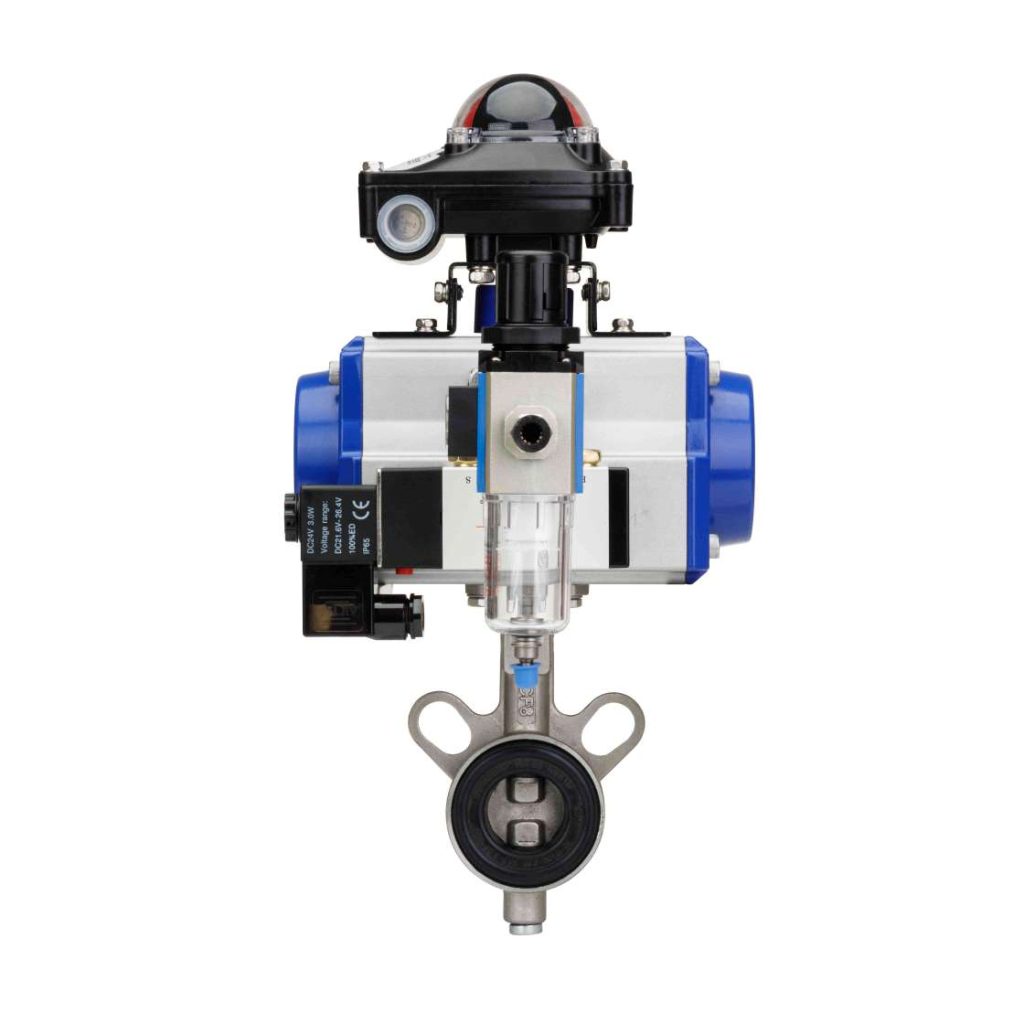
Design and Functionality
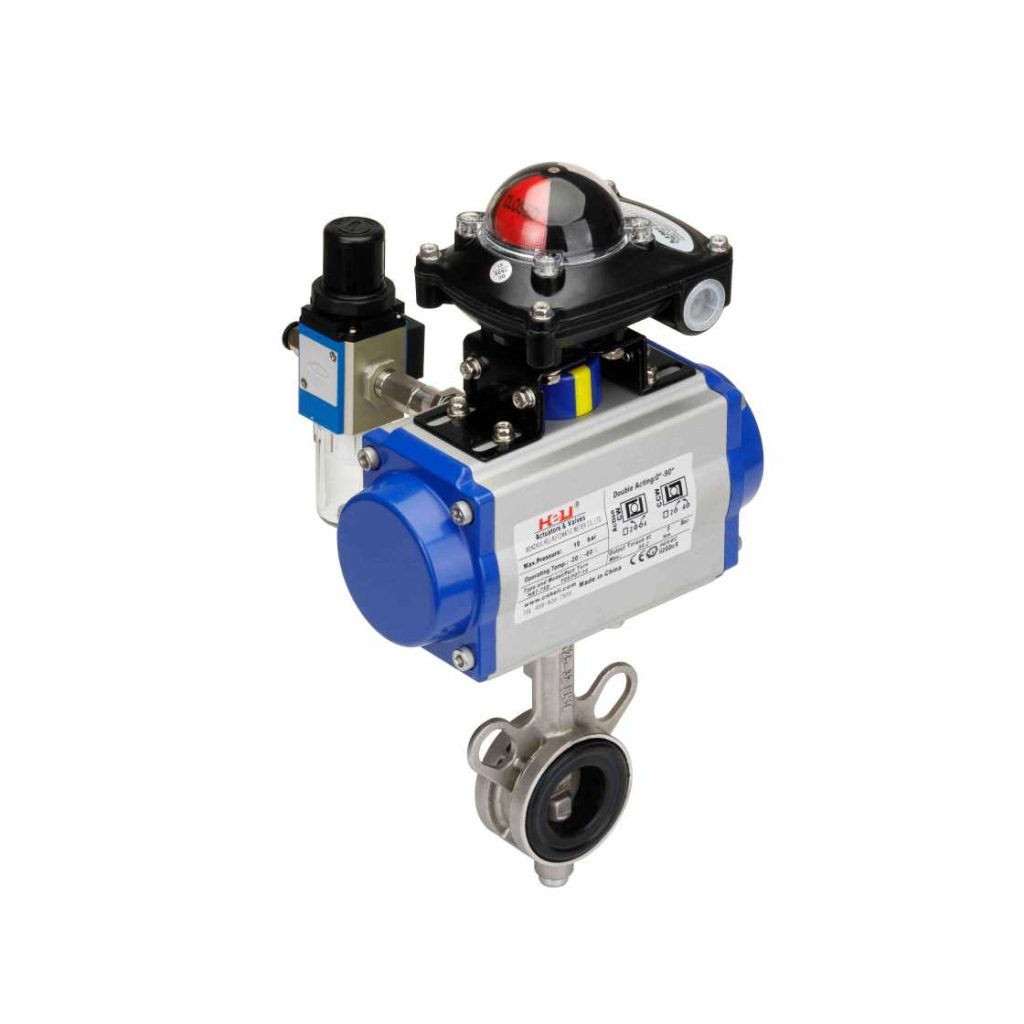
A pneumatic butterfly valve consists of a disc-shaped valve body that rotates within a pipeline to control the flow of fluid. The valve’s central component, the disc, is mounted on a shaft, which is connected to a pneumatic actuator. This actuator, powered by compressed air, opens and closes the valve by rotating the disc. The pneumatic actuator’s operation is controlled by a signal from a control system, enabling precise adjustments to the valve position. When the valve is in the fully open position, the disc is parallel to the flow of fluid, allowing maximum flow rate. Conversely, when the valve is closed, the disc is perpendicular to the flow, completely blocking the passage. For applications that require throttling or modulating the flow, the actuator adjusts the valve position to allow controlled flow rates, making pneumatic butterfly valves versatile in many industrial settings.