If you’ve ever knelt behind a desk to untangle a mess of power cords, HDMI cables, and USB extensions, you know exactly how frustrating disorganized wiring can be. What starts as a handful of cables quickly turns into a tangled knot that traps dust, blocks airflow, and turns a simple device swap into a 20-minute headache. This is where cable management ducts step in, and they’ve quietly become one of the most practical, underrated upgrades for any space that deals with multiple electronics—from home offices to industrial server rooms. Unlike flimsy cable ties or messy tape solutions, these purpose-built channels offer a long-term way to keep wiring sorted, safe, and easy to access when you need it.
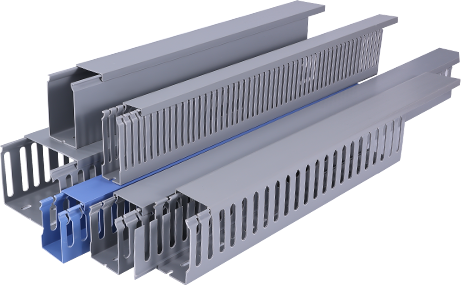
First, it’s important to understand what sets cable management ducts apart from other common cable organization solutions. At their core, these are pre-formed channels, usually made from durable PVC or low-smoke halogen-free plastic, designed to hold multiple cables of different sizes in one neat enclosure. Most designs feature an open-slotted side that makes it easy to add or remove cables without ripping out the entire installation, unlike closed conduit that requires cutting and re-fitting every time you make a change. This flexibility makes them ideal for spaces where electronics are updated or rearranged regularly, such as co-working offices, conference rooms, or gaming setups that get upgraded every few years. Unlike adhesive cable clips that can fall off over time or leave sticky residue on walls and desks, cable management ducts mount securely with screws or strong mounting tape, holding up to years of use without losing their grip.
Secondly, the practical benefits of installing cable management ducts go far beyond just making a space look neater. One of the most underappreciated advantages is improved safety. Tangled loose cables are a major tripping hazard in high-traffic areas, and they also trap heat around power cords, which can create a fire risk if cables overheat during prolonged use. Ducts keep cables contained and separated, allowing for better airflow that prevents overheating, and they eliminate loose wires running across walkways that can cause falls. For commercial spaces, this isn’t just a convenience—it’s often a requirement to meet workplace safety codes. Additionally, keeping cables contained in a duct protects them from damage. Cables that are left loose can get stepped on, chewed by pets, or crunched under moving furniture, which can fray insulation and damage internal wiring over time. A good duct acts as a protective layer, extending the lifespan of your cables and reducing the need for costly replacements.
Another key advantage of cable management ducts is how they simplify maintenance and upgrades down the line. Anyone who’s ever tried to figure out which cable connects to which device in a tangled mess knows how much time gets wasted tracing wires when something stops working. With a cable management duct, you can group cables by function—for example, all power cords in one duct, all data cables in another, and all audio/visual cables in a third. Many people even add simple labels on the outside of the duct to note which cable goes where, so you can pull out exactly what you need in seconds instead of pulling apart the entire mess. For IT teams managing server rooms or commercial audio/visual setups, this cuts down maintenance time dramatically, and it means less downtime when a device needs to be replaced or reconfigured. Even for home users, it means you won’t have to move your entire desk just to swap out a broken charger or add a new monitor.
Furthermore, cable management ducts are adaptable to almost any space and aesthetic. Many people assume that cable organization solutions have to be bulky or ugly, but modern duct designs come in a range of sizes, colors, and profiles to fit different needs. Slim, low-profile ducts can be painted to match your wall color, making them almost invisible in a home office or living room. Larger, heavy-duty ducts are designed to hold dozens of thick power and data cables in server rooms or industrial settings, with reinforced construction to support extra weight. You can find corner ducts that fit along baseboards, under-desk ducts that attach to the underside of work surfaces to keep cables off the floor, and even surface-mounted ducts that don’t require any messy in-wall installation, making them perfect for renters who can’t modify their walls. This versatility means there’s a cable management duct solution for almost any space, regardless of size or layout.
Finally, it’s easy to write off cable management ducts as a small, unnecessary upgrade, but the time and stress they save over the years makes them well worth the modest investment. Unlike temporary fixes that need to be replaced every time you rearrange your space, a good cable management duct installation lasts for decades, and it adds value to any home or commercial property by keeping wiring safe and organized. Whether you’re setting up a new home office, rearranging a commercial workspace, or just tired of dealing with a tangled mess behind your desk, adding cable management ducts is a simple change that makes a huge difference in how your space looks and functions. They really are the unsung heroes of modern wired spaces, working quietly in the background to keep everything running smoothly.