Automobiles are complex machines with a myriad of electrical systems that ensure smooth operation. One of the critical components that help in controlling these systems is the car relay. A relay is an electrically operated switch that allows a low voltage signal to control a high voltage circuit. Car relays come in different types, each suited for specific functions in a vehicle. Understanding these types and their applications is essential for both automotive technicians and car enthusiasts. This article will explore the various car relay types and their uses.
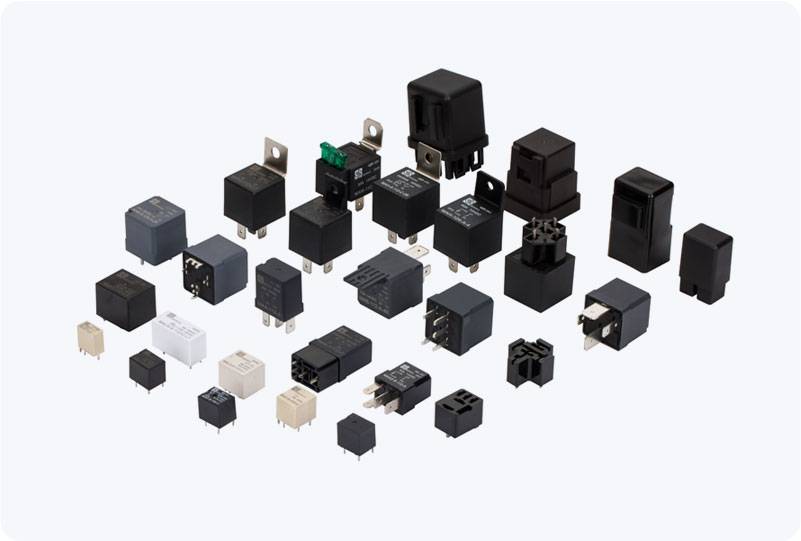
1. Standard Relay The standard relay is the most common type found in vehicles. It uses an electromagnet to open or close a set of contacts. This relay is typically used to control high-current devices such as the starter motor, headlights, or air conditioning. The relay allows a small current to activate a larger current without directly running the high current through the vehicle’s control circuit. Standard relays are essential for the safe operation of many automotive systems, preventing damage to sensitive components from excess current. 2. Solid-State Relay Unlike standard relays that rely on mechanical parts, solid-state relays (SSRs) operate with semiconductor components, such as transistors. These relays offer faster switching times, greater reliability, and a longer lifespan due to the lack of moving parts. Solid-state relays are more efficient at controlling the flow of electricity, reducing the likelihood of mechanical failure. They are often used in modern vehicles for high-frequency switching applications, such as controlling the lights or power windows, where rapid response is required.