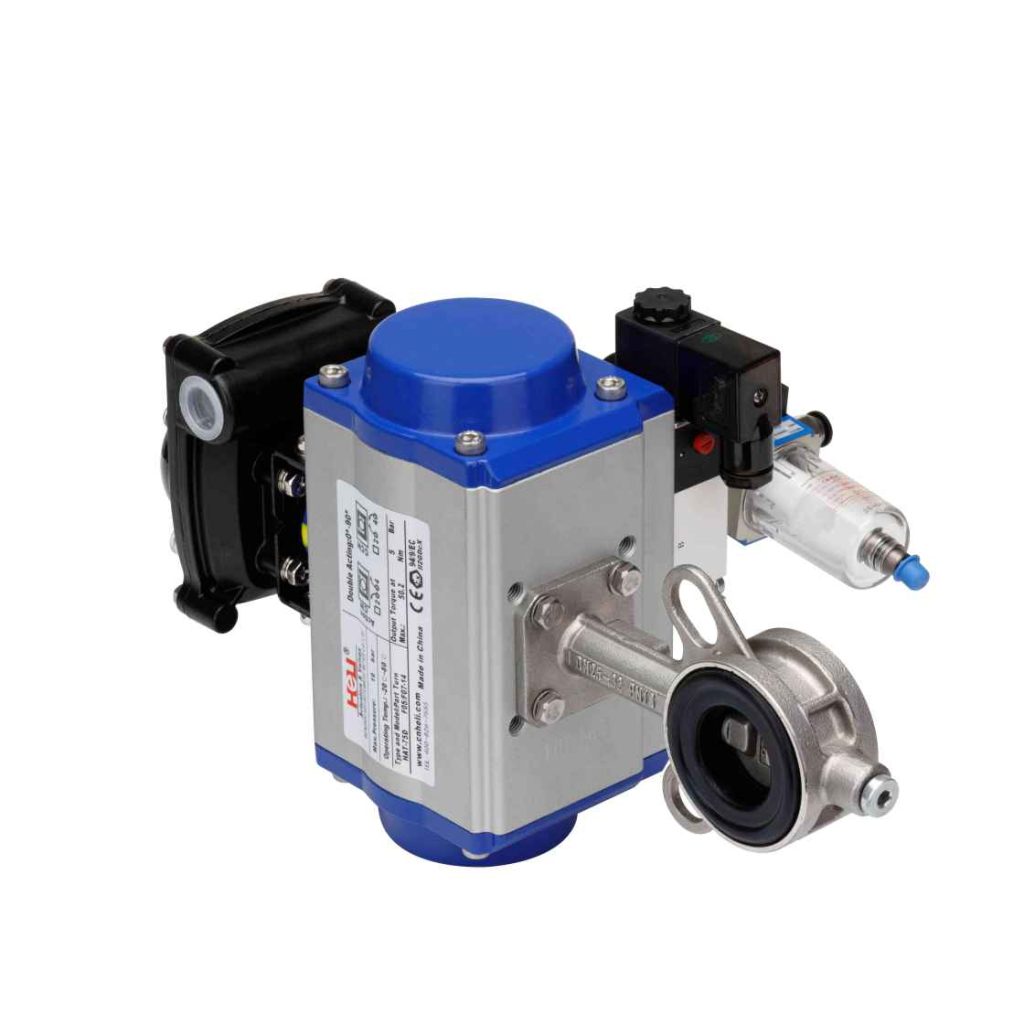
The WCB Pneumatic Butterfly Valve is a crucial component used in various industries to control the flow of liquids, gases, or slurries in pipelines. With its versatile design, this valve ensures efficiency, durability, and reliability in systems where precise flow regulation is necessary. The combination of a WCB (Wrought Carbon Steel) body with pneumatic actuation makes this valve an excellent choice for numerous industrial applications. In this article, we will delve into the structure, working principles, applications, benefits, and maintenance of the WCB Pneumatic Butterfly Valve.
Structure and Design
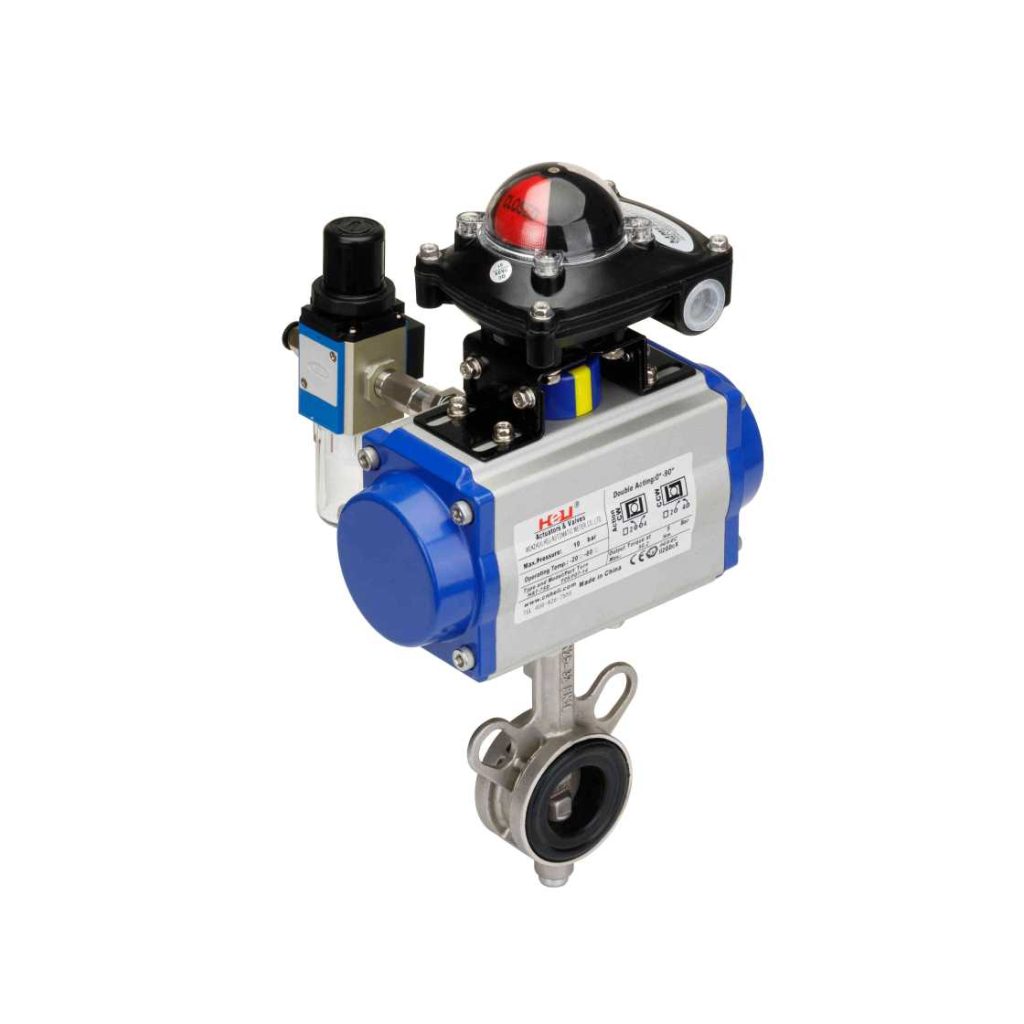
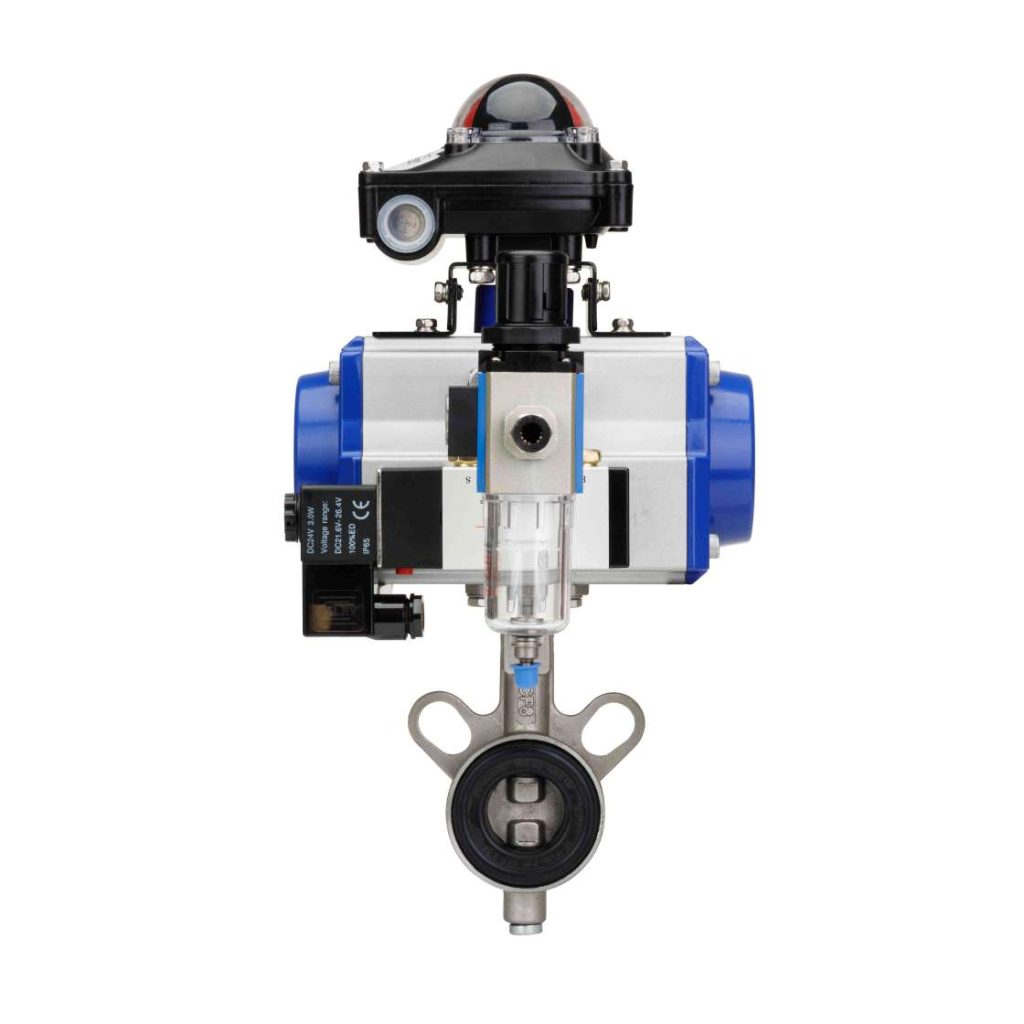
The WCB Pneumatic Butterfly Valve is composed of several key components, including the valve body, disc, stem, actuator, and various sealing components. The WCB (Wrought Carbon Steel) body provides robust strength and corrosion resistance, which is essential for handling fluids in demanding environments. The valve’s disc, typically made of stainless steel or other corrosion-resistant materials, is the primary component that regulates the flow. It rotates 90 degrees to either block or allow the passage of fluid. The pneumatic actuator is responsible for the valve’s operation. It uses compressed air to rotate the valve’s disc, which allows for quick and efficient control over the flow. The actuator can be single-acting or double-acting, depending on the specific application. A single-acting actuator requires a spring to return the valve to its default position, while a double-acting actuator allows for control in both directions without the need for a spring.