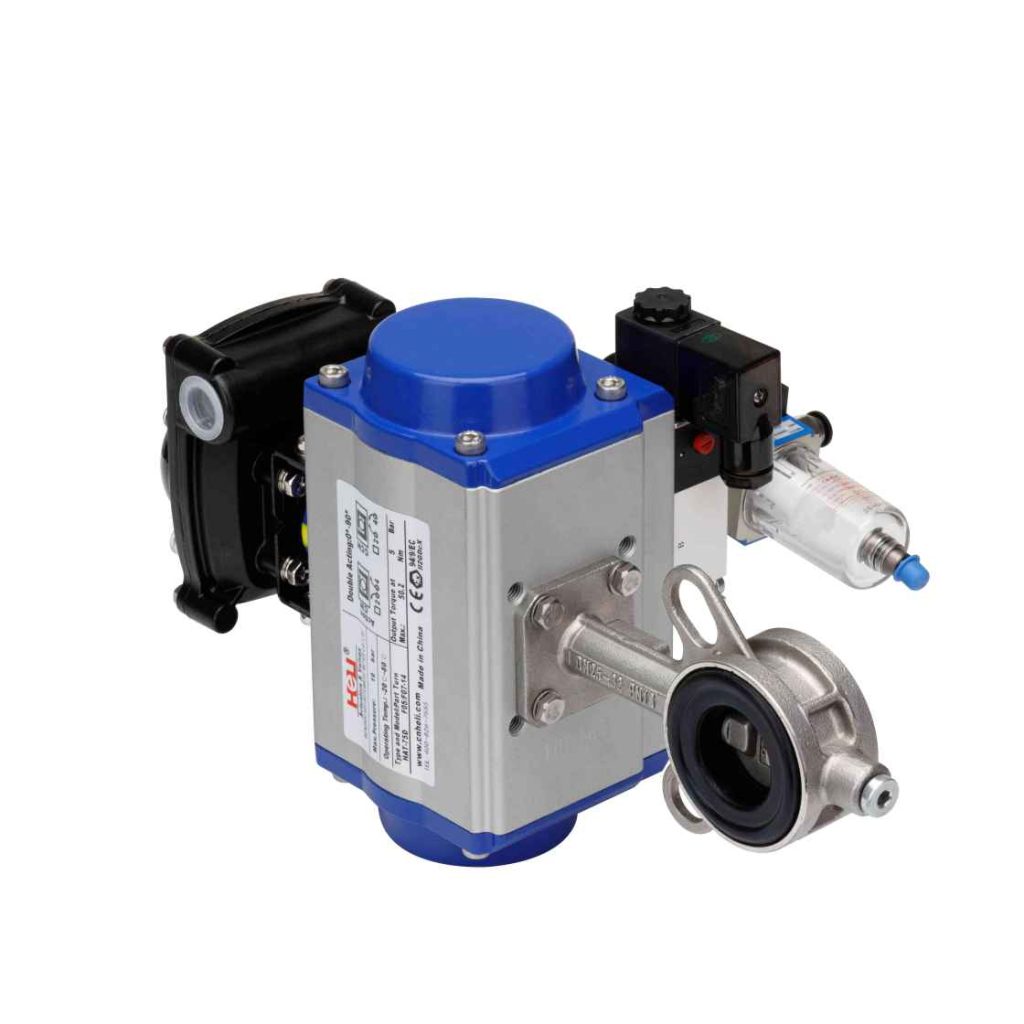
The pneumatic butterfly valve is a key component in many industrial fluid control systems, serving as a reliable method for regulating the flow of fluids, gases, and slurries. This valve, driven by compressed air, is known for its simple design, cost-effectiveness, and fast operational response, making it suitable for a variety of applications in sectors such as petrochemical, water treatment, and manufacturing. In this article, we will explore the structure, working principle, advantages, and typical applications of the pneumatic butterfly valve.
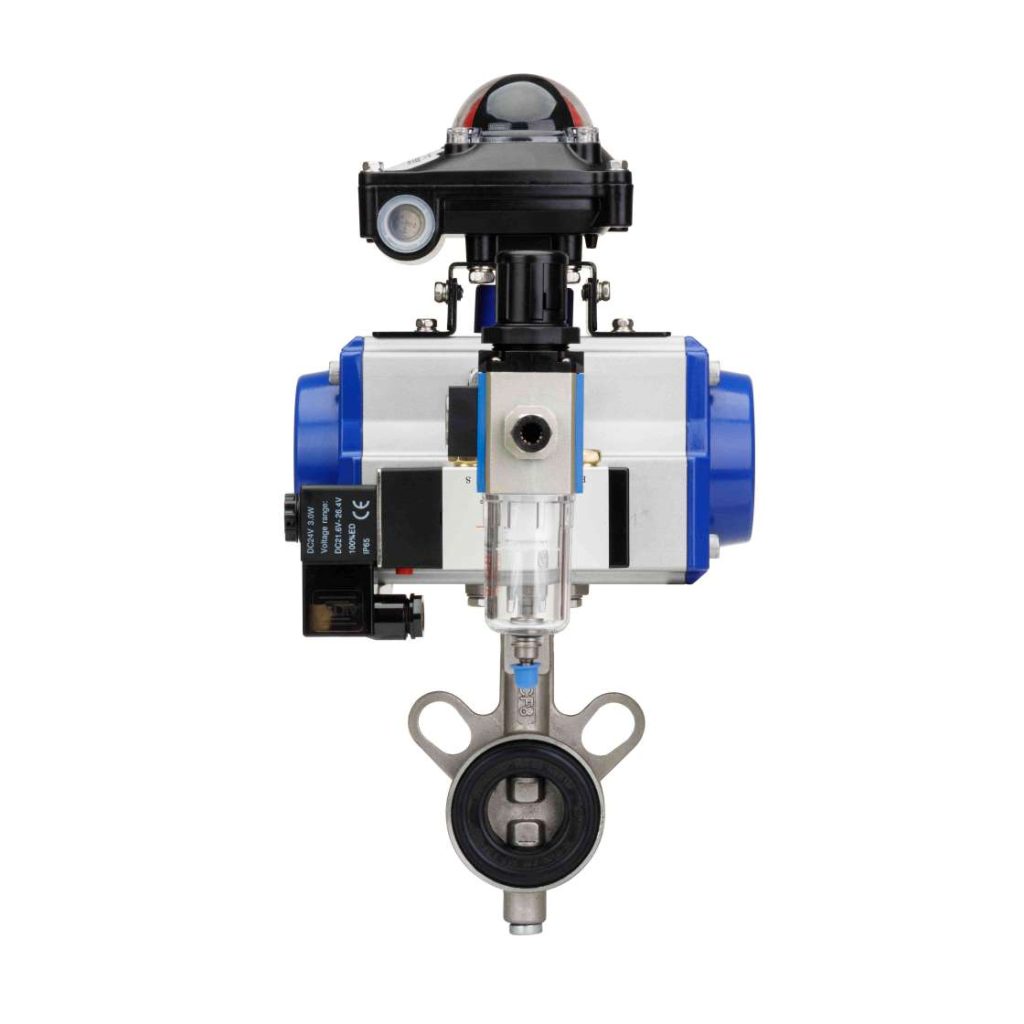
What is a Pneumatic Butterfly Valve?
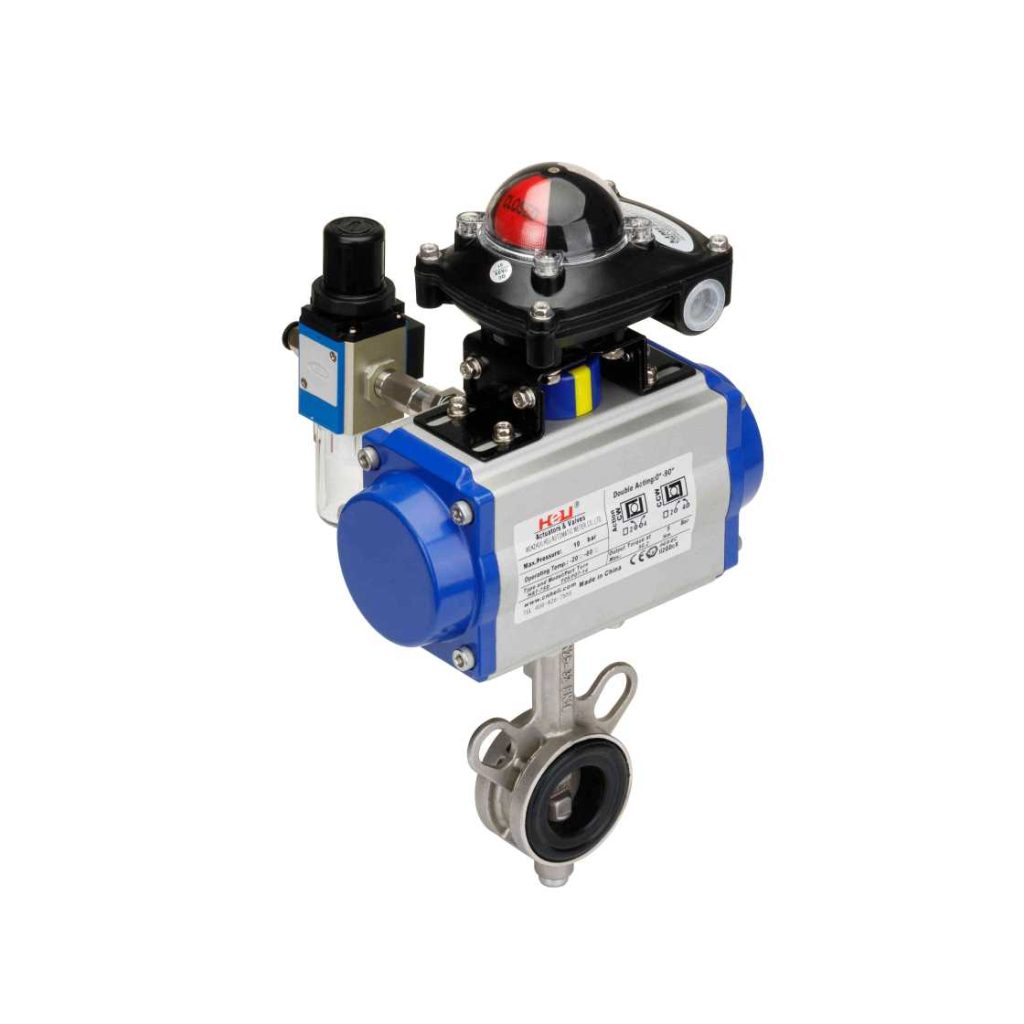
A pneumatic butterfly valve consists of a disc-shaped plate, called the butterfly valve disc, which rotates around an axis to control the flow of material through a pipe. Unlike traditional valves, the butterfly valve operates by rotating the disc within the flow path. In a pneumatic butterfly valve, the rotational force for opening and closing the valve is provided by an air-powered actuator. The key components of this valve include: Valve Body: The casing that holds the valve’s internal components, typically made from cast iron, stainless steel, or other durable materials depending on the application.