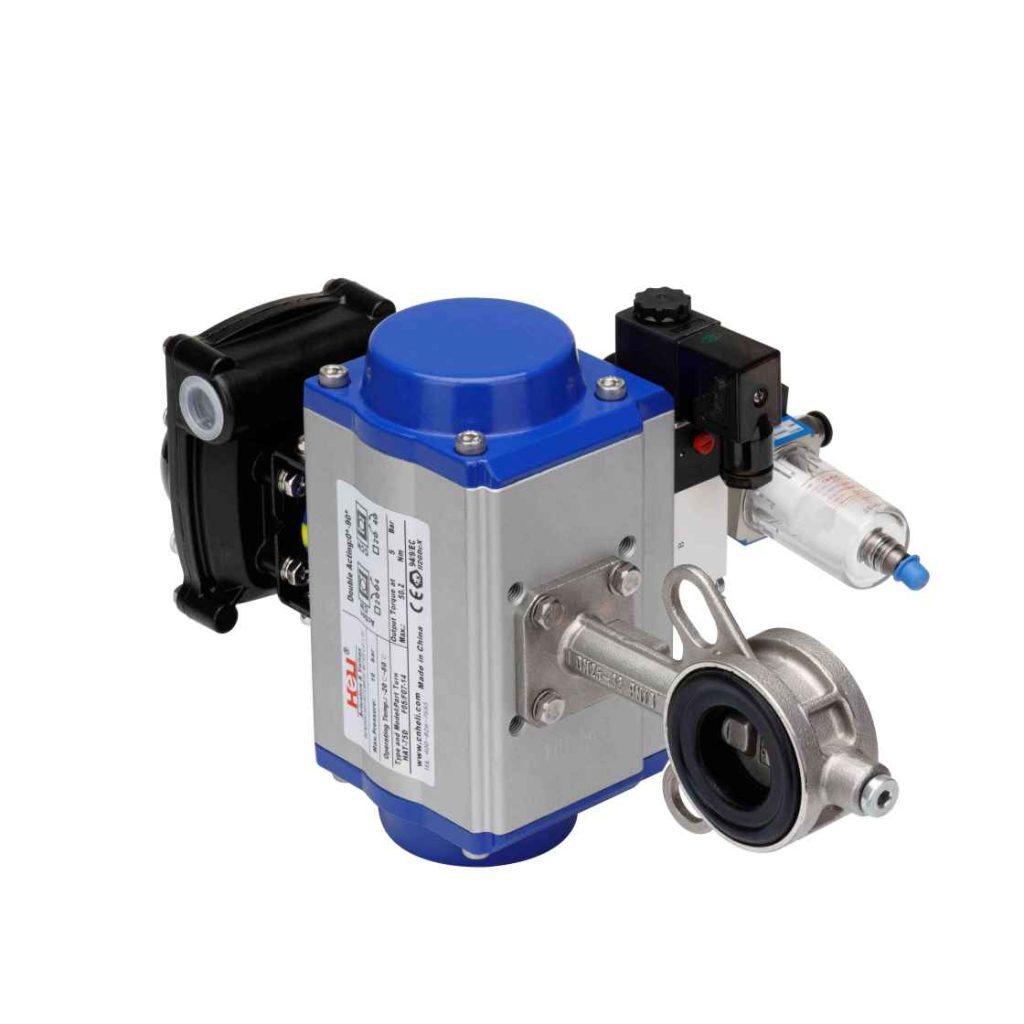
A pneumatic butterfly valve is a versatile and widely used component in industrial automation and fluid control systems. Known for its simple design and effective operation, this type of valve plays a crucial role in regulating the flow of various fluids, such as air, water, oil, and gases. Its popularity stems from its efficiency, cost-effectiveness, and ability to handle a variety of industrial applications. In this article, we will explore the working principles, advantages, and common applications of pneumatic butterfly valves.
What is a Pneumatic Butterfly Valve?
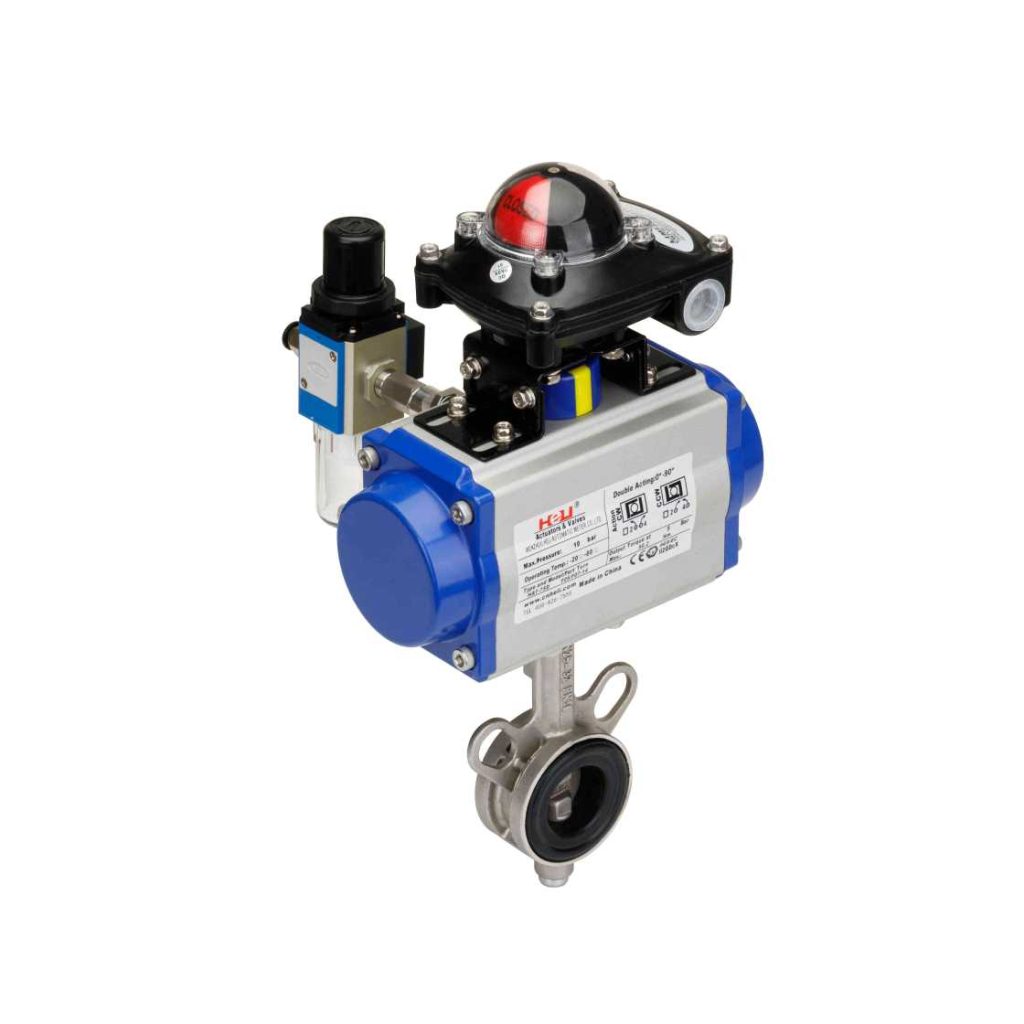
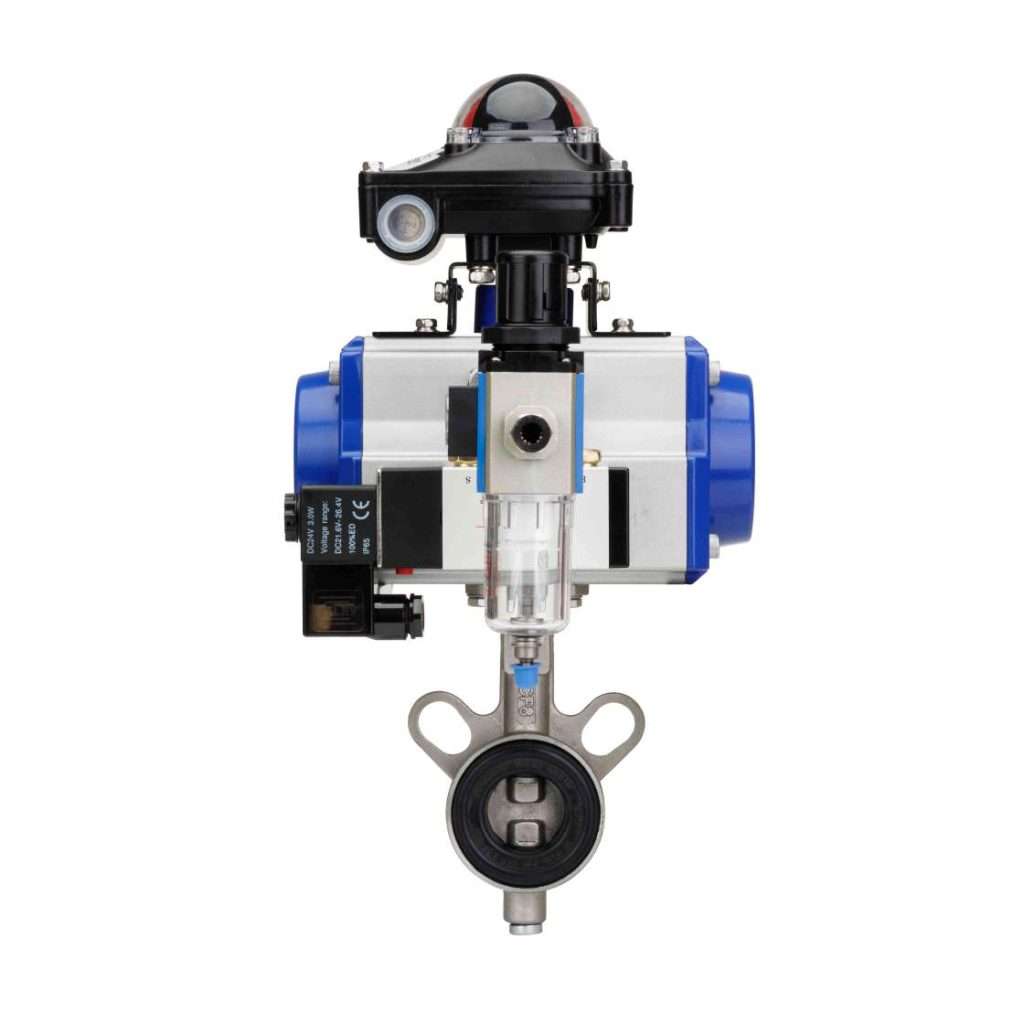
A pneumatic butterfly valve is a type of valve that uses compressed air to operate a rotating disk to control fluid flow. The valve consists of a circular disc (the “butterfly”) mounted on a shaft, which pivots to either block or allow the flow of media through the pipeline. Pneumatic actuators, powered by air pressure, are used to control the position of the butterfly, ensuring that the valve can open or close based on the system’s requirements. These valves are characterized by their compact and lightweight design, making them suitable for a wide range of applications where space and weight are critical considerations. Pneumatic butterfly valves are often used in systems requiring fast response times, precise flow control, and low maintenance.