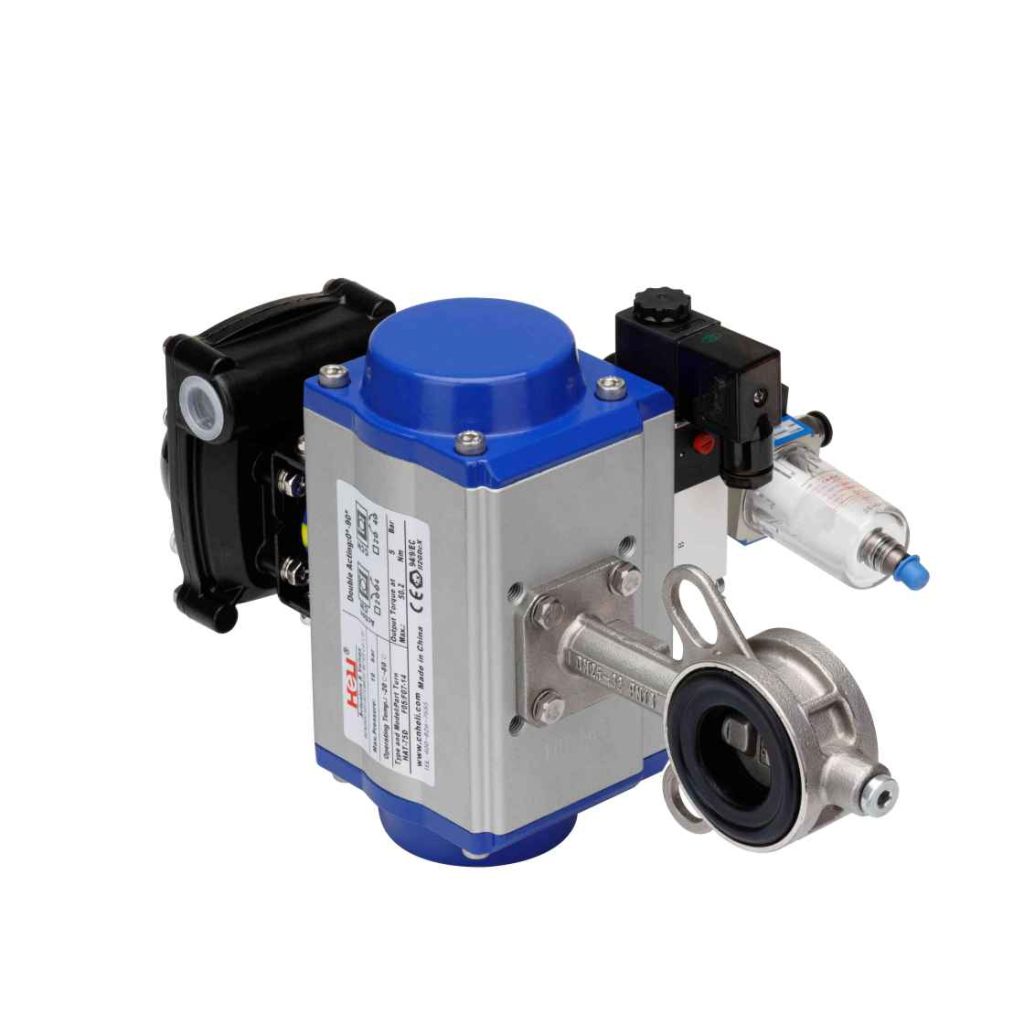
The pneumatic butterfly valve is an essential component used in a wide range of industries for flow control applications. Renowned for its simple structure, high efficiency, and rapid response, the pneumatic butterfly valve plays a crucial role in regulating the flow of fluids such as liquids, gases, and slurries. Driven by pneumatic actuators, these valves are designed to be highly responsive, cost-effective, and reliable, making them a popular choice for automated systems.
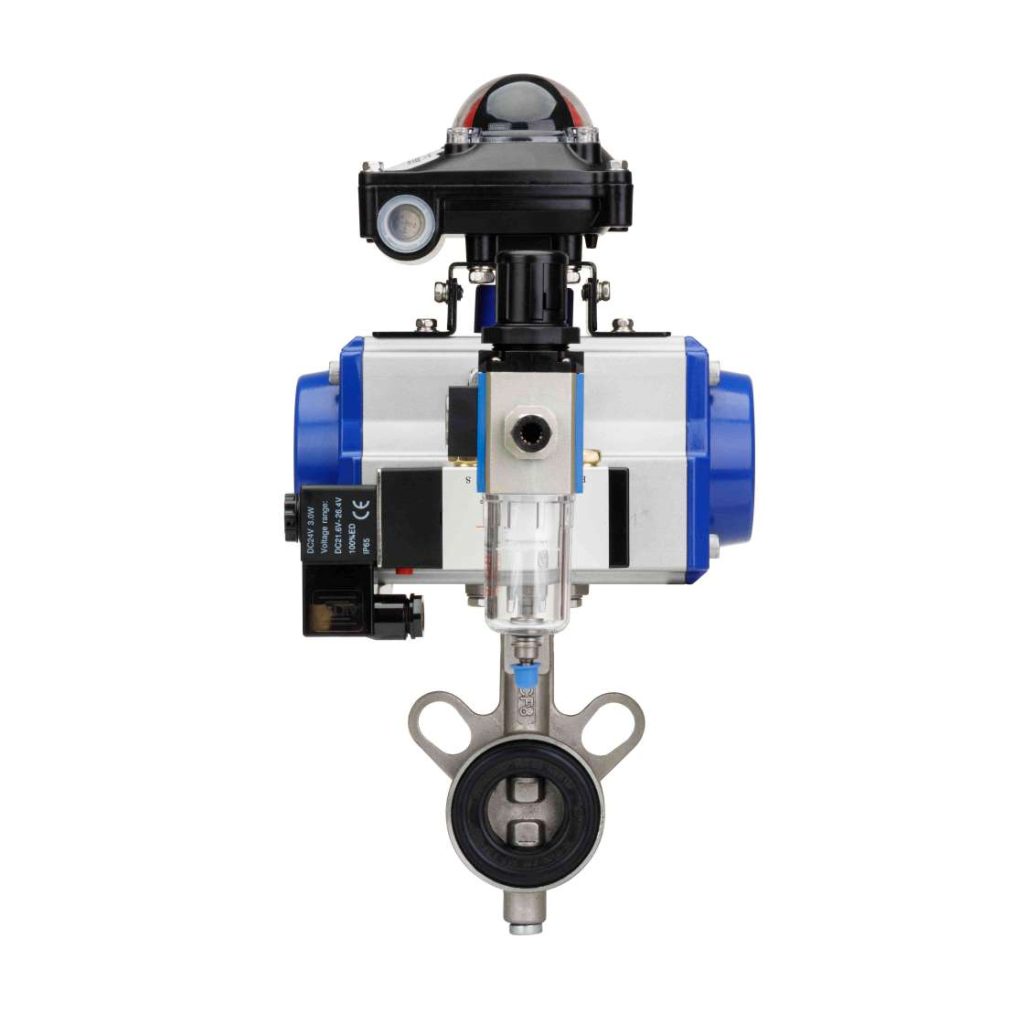
What is a Pneumatic Butterfly Valve?
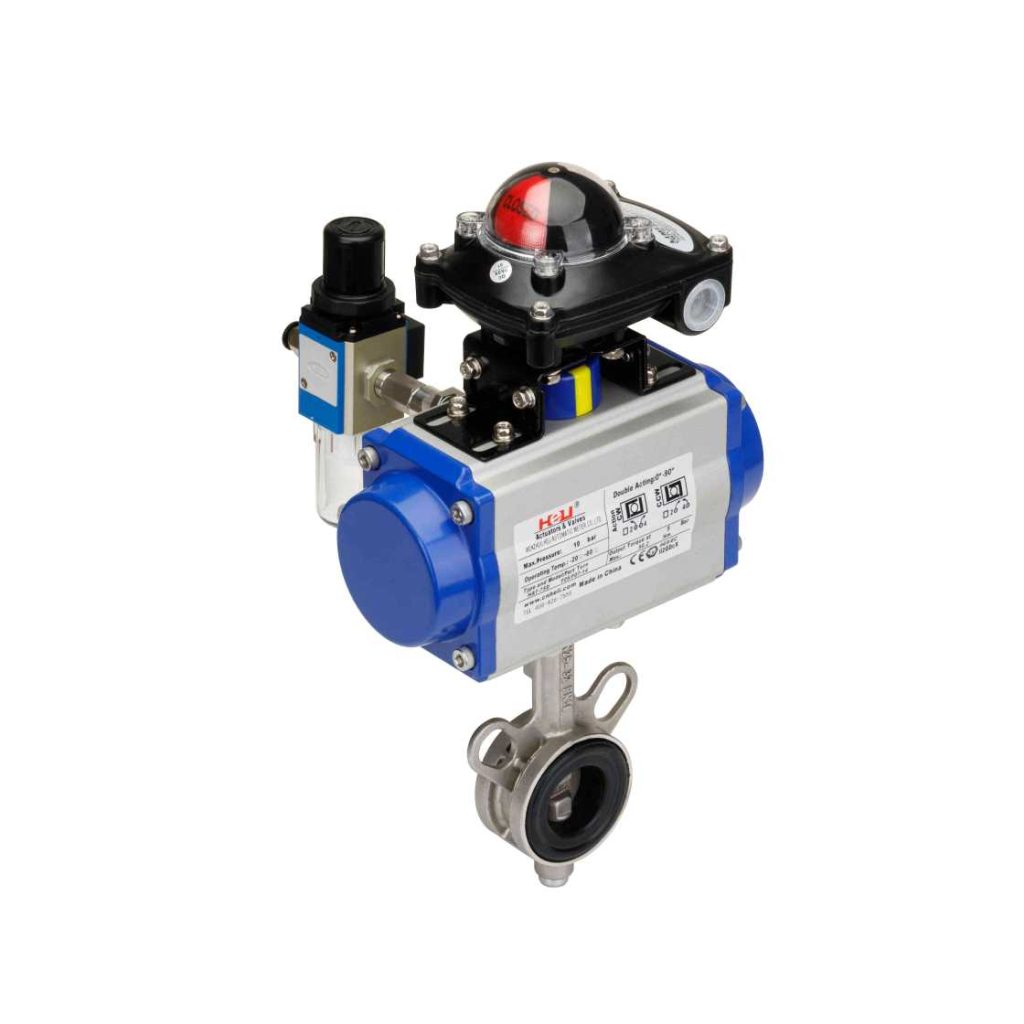
A pneumatic butterfly valve consists of a circular disc, known as the butterfly valve body, which is positioned inside a pipe. The valve is actuated by a pneumatic actuator, which uses compressed air to rotate the valve disc either fully or partially, allowing fluid to pass or blocking it completely. The actuator typically operates through a 90-degree rotation, enabling quick opening and closing of the valve. The butterfly valve’s disc is mounted on a shaft that connects to the actuator, which, when activated, causes the disc to rotate and either allow or obstruct fluid flow. The main advantage of the butterfly valve is its ability to control the flow of media without requiring a large amount of space, making it ideal for tight installations.