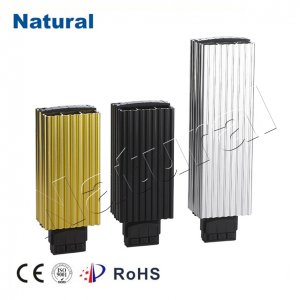
Element heaters are integral components in many modern heating systems, offering a reliable and efficient way to generate heat for various applications. Whether in industrial processes, household appliances, or automotive systems, element heaters are an essential technology that harnesses the power of electricity to produce heat. In this article, we will explore the working principles of element heaters, the different types available, and their common applications in various sectors.
Working Principles of Element Heaters
The core principle behind element heaters is the conversion of electrical energy into heat. This process is known as Joule heating or resistive heating, where an electric current passes through a conductive material, and the material’s resistance causes the electrical energy to be transformed into thermal energy. The amount of heat produced is proportional to the resistance of the material and the amount of current flowing through it, as described by Ohm’s law. In element heaters, the electrical resistance is typically provided by heating elements made of high-resistance materials. When current flows through these elements, the electrical energy is dissipated in the form of heat. The heat generated is then transferred to the surrounding environment, which may be a space, liquid, or solid that needs to be heated.