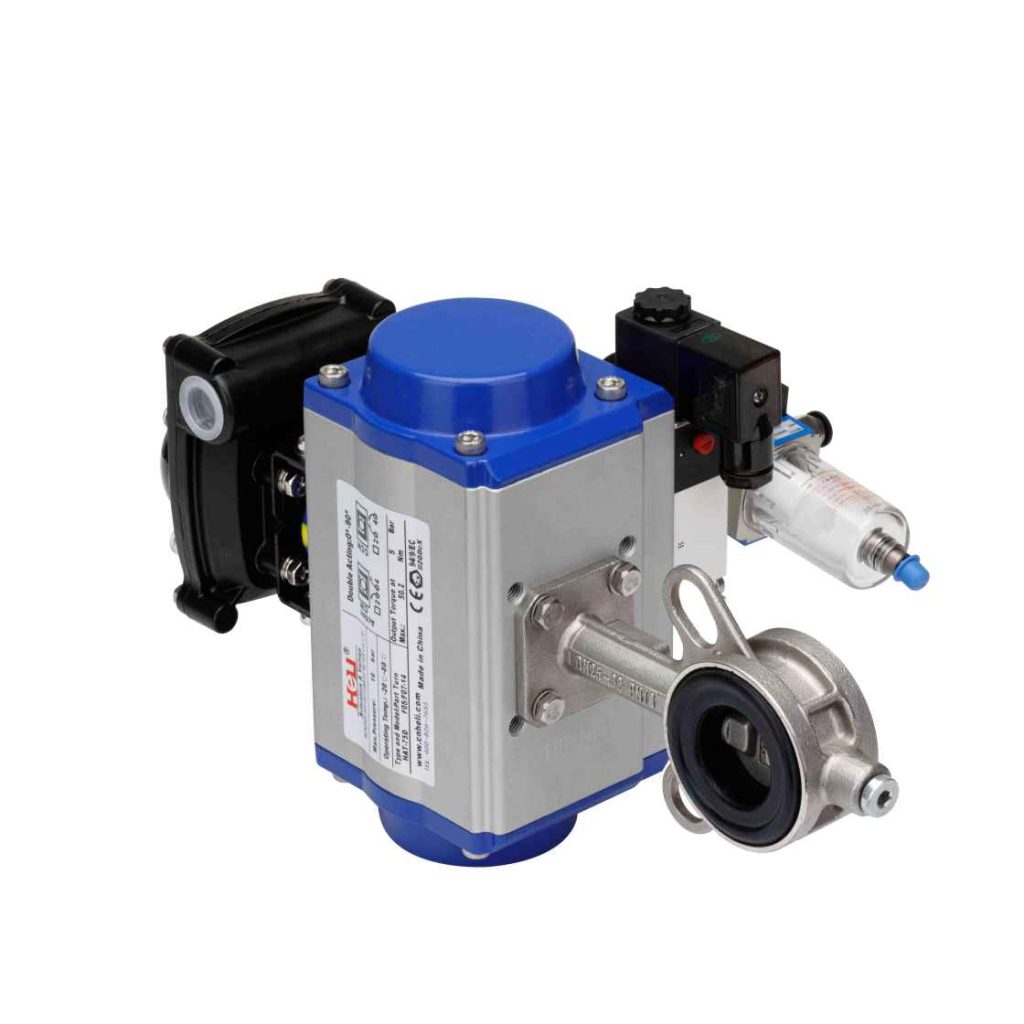
Pneumatic butterfly valves are a critical part of fluid and gas control systems across various industries. Their ability to provide efficient and reliable operation in regulating flow has made them popular in applications where precise control, durability, and cost-efficiency are required. This article will explore the fundamentals of pneumatic butterfly valves, their working principles, applications, advantages, and maintenance tips.
What is a Pneumatic Butterfly Valve?
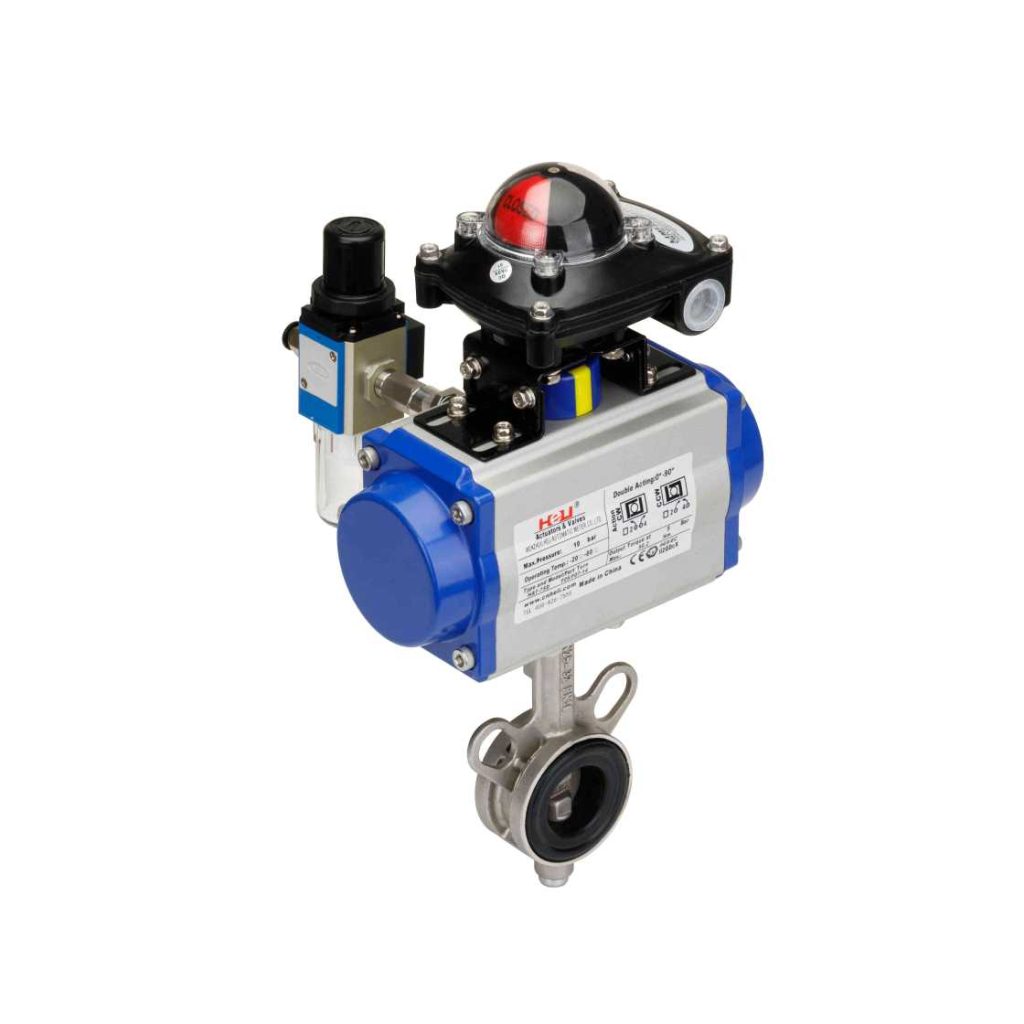
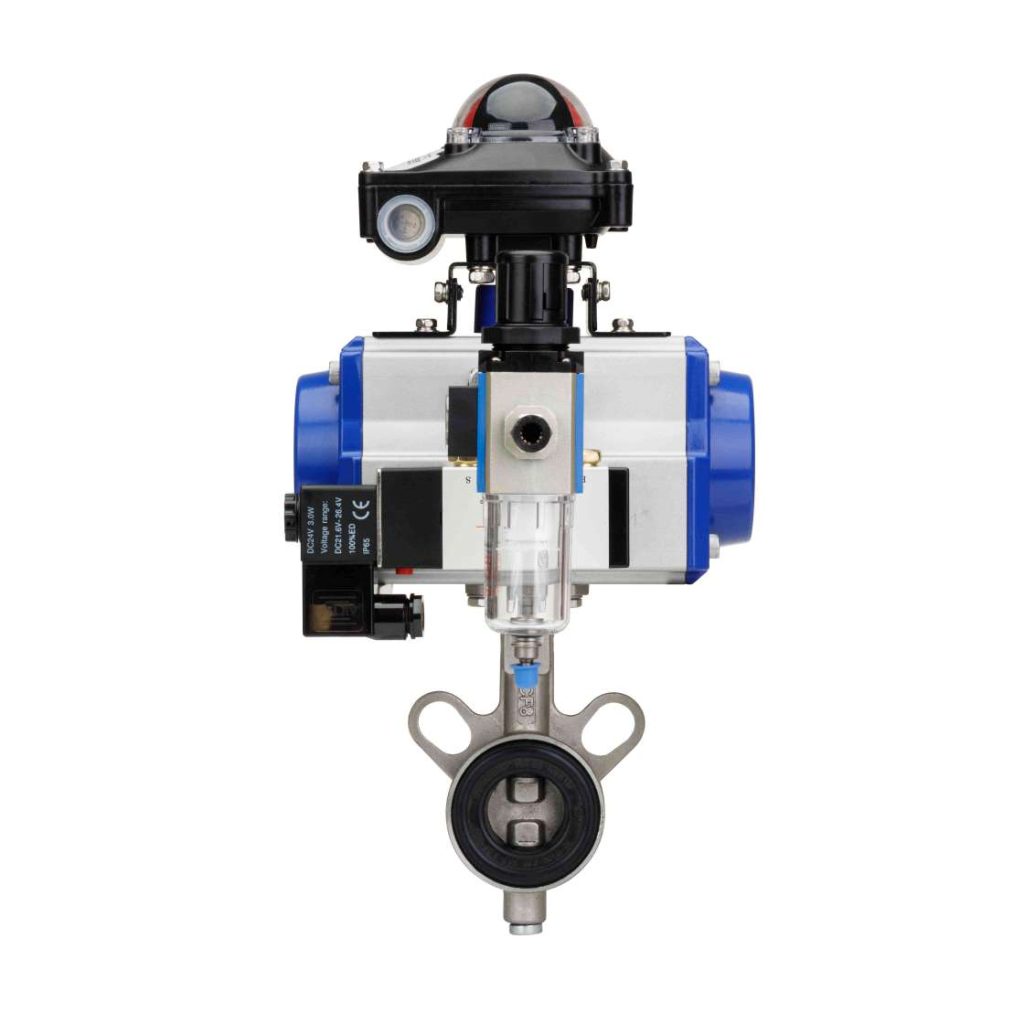
A pneumatic butterfly valve is a valve that uses compressed air to actuate a disc to control the flow of media through a pipeline. The basic structure consists of a circular body, a disc that rotates 90 degrees, and an actuator that is powered by compressed air. The disc is positioned in the flow path of the pipeline, and when the actuator is engaged, the disc either rotates to allow the flow or closes to stop it. The actuator’s pneumatic feature provides quick response and efficient operation, making it suitable for applications where speed and precision are critical. These valves are commonly used in industries such as water treatment, food processing, chemical plants, and HVAC systems.