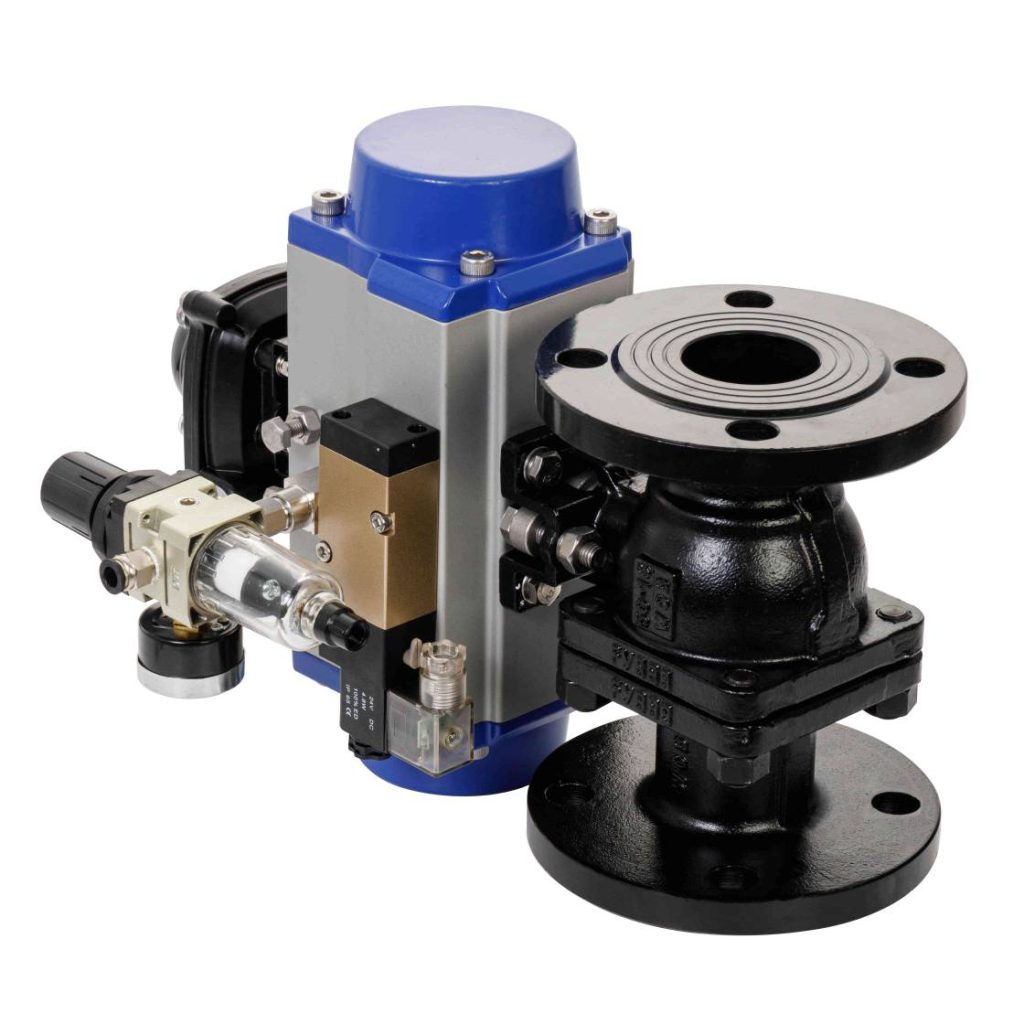
The Pneumatic Ball Valve is a crucial component in modern industrial automation and fluid control systems. It combines the well-established functionality of a traditional ball valve with a pneumatic actuator, enabling fast, reliable, and automated control of fluid flow in various applications. From oil and gas to pharmaceuticals and food processing, pneumatic ball valves play a key role in optimizing operational efficiency, safety, and precision.
1. What is a Pneumatic Ball Valve?
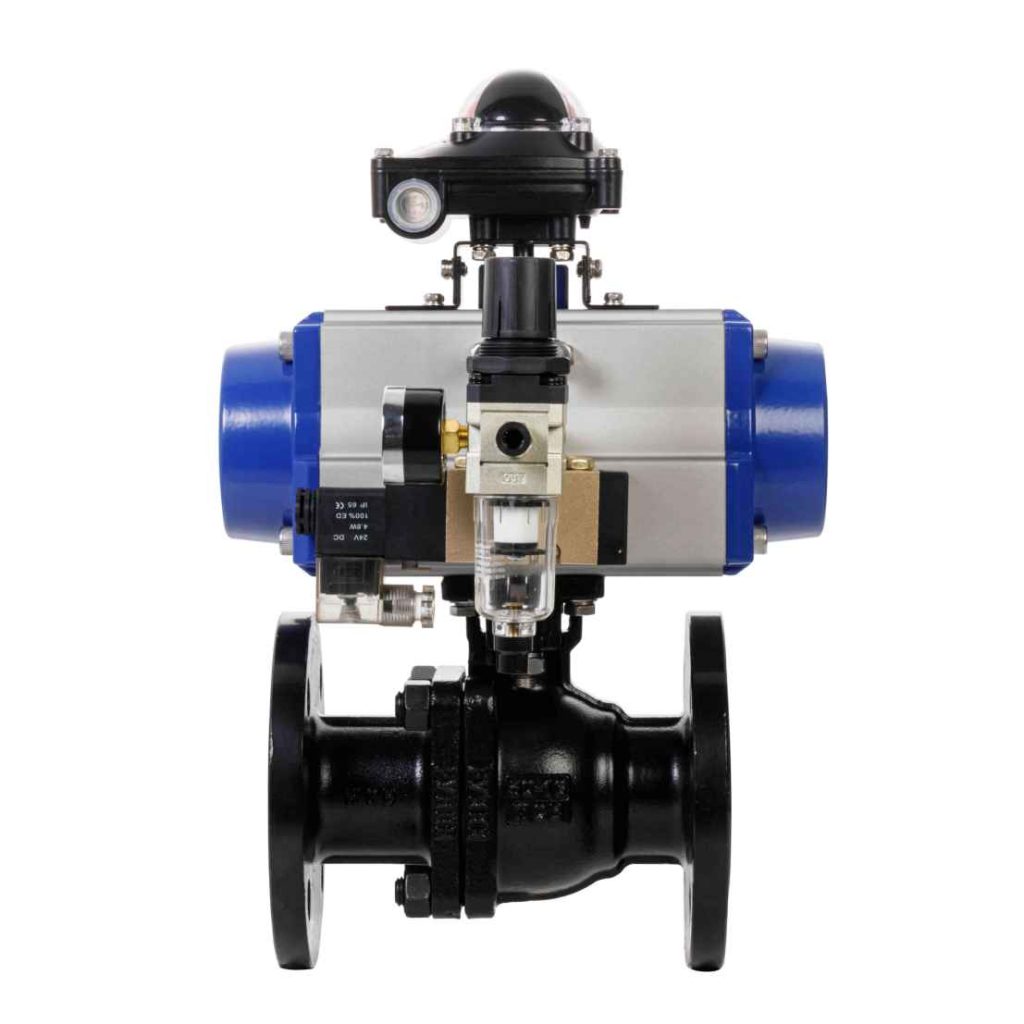
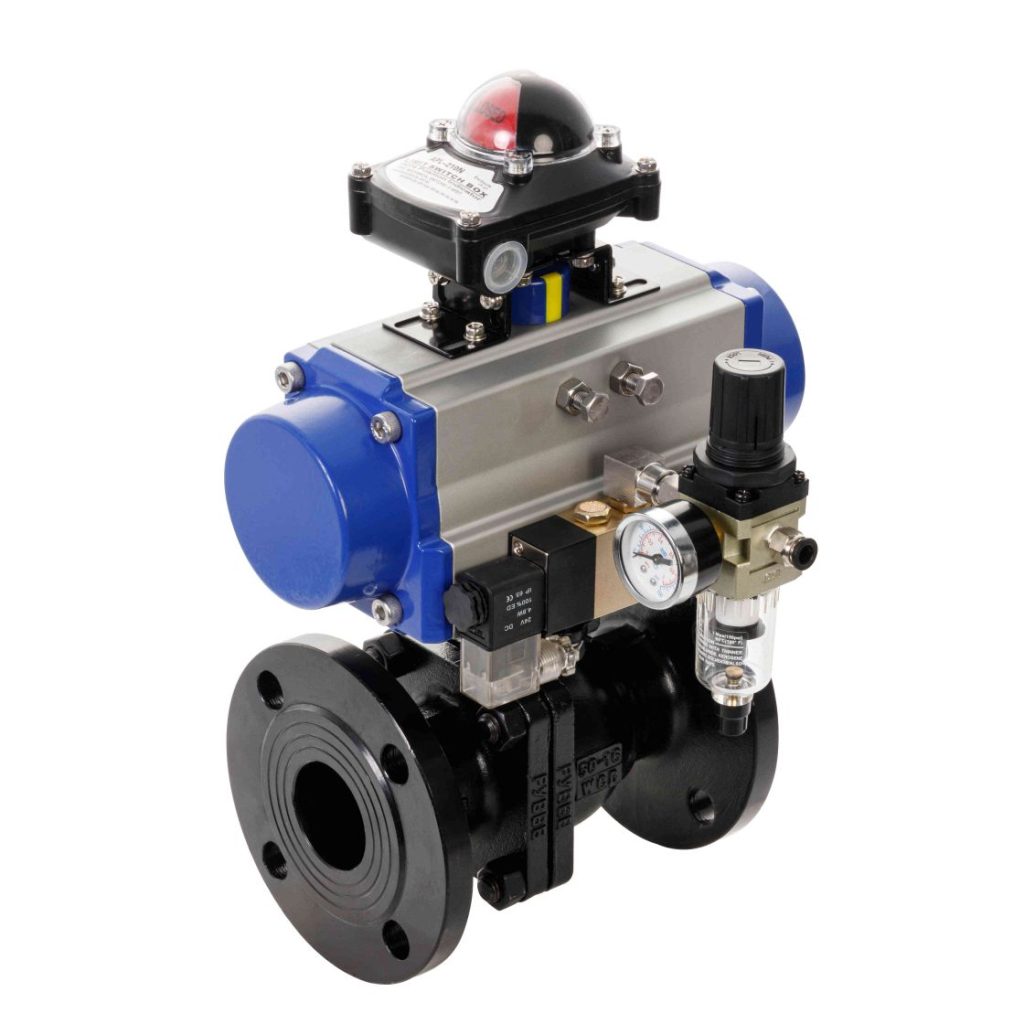
A Pneumatic Ball Valve is a type of ball valve that uses compressed air (pneumatic pressure) to operate the valve mechanism. The valve has a spherical closure element, called a “ball,” with a hole or port through its center. When the ball is rotated by the pneumatic actuator, the port aligns with the pipeline, allowing fluid to flow through. Conversely, when the ball is rotated by the actuator to the closed position, the flow path is blocked, and the valve is shut. In essence, the pneumatic actuator replaces manual operation, offering faster and more precise control over the valve’s position, which is particularly important in automation processes.