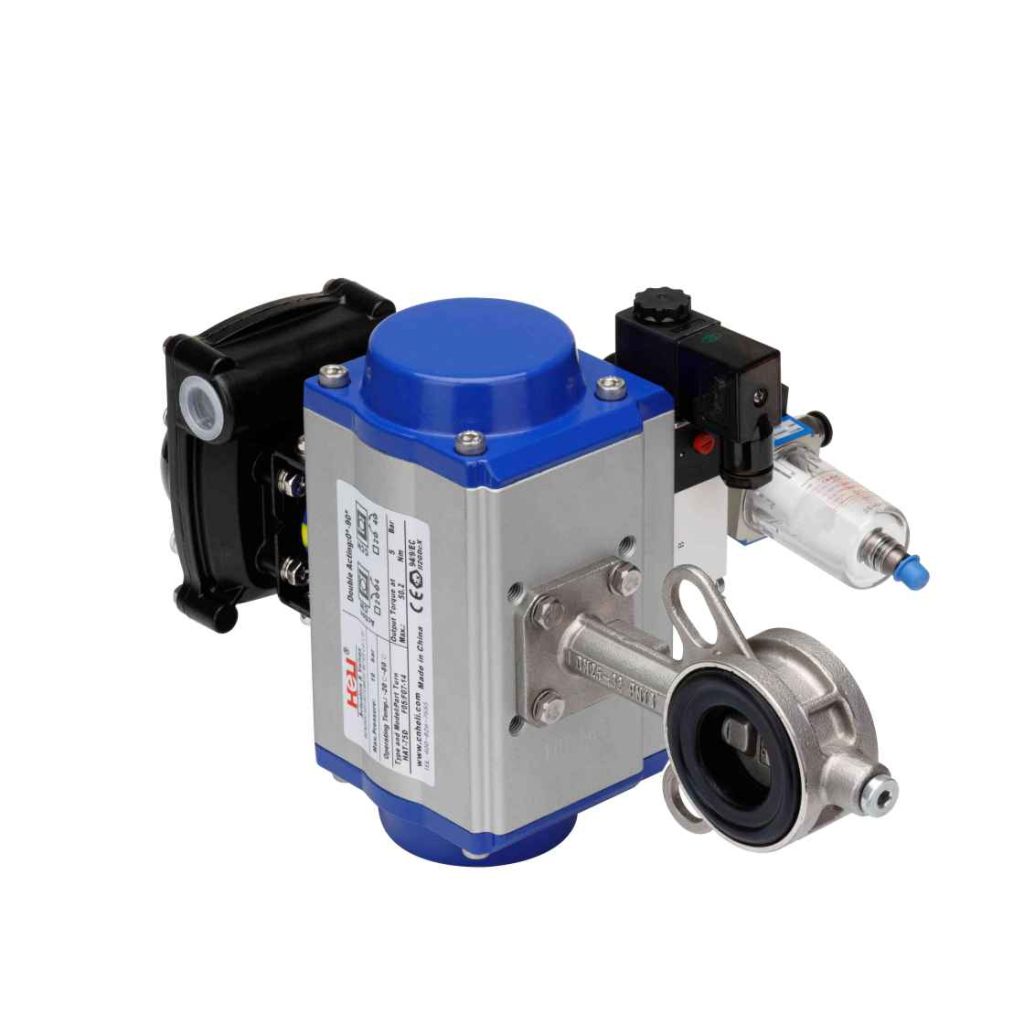
Pneumatic butterfly valves are essential components in fluid control systems, widely used in industries such as water treatment, oil and gas, chemical processing, and HVAC systems. These valves are designed to regulate the flow of fluids, including gases and liquids, with high efficiency and ease of operation. The primary advantage of pneumatic butterfly valves is their ability to provide quick and reliable control in automated systems, making them crucial for industries that rely on fast, responsive fluid management.
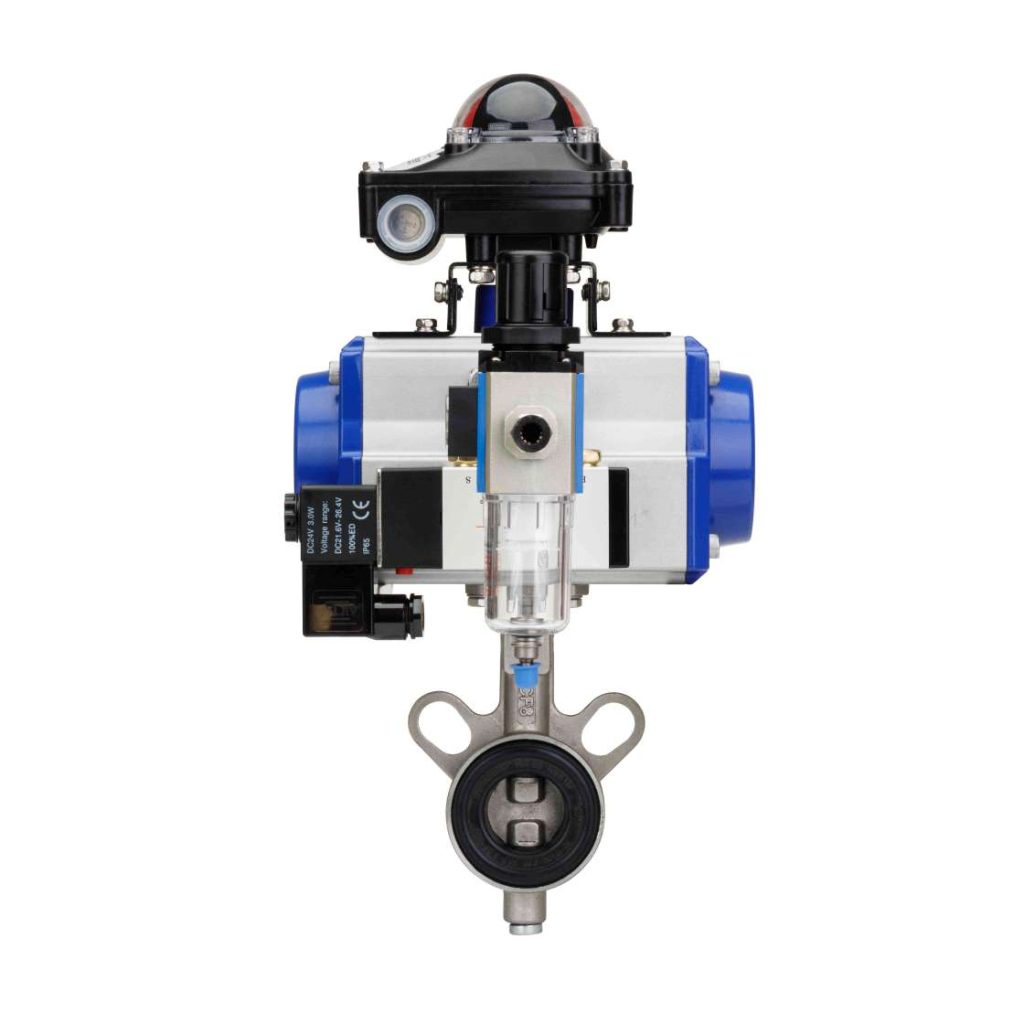
What is a Pneumatic Butterfly Valve?
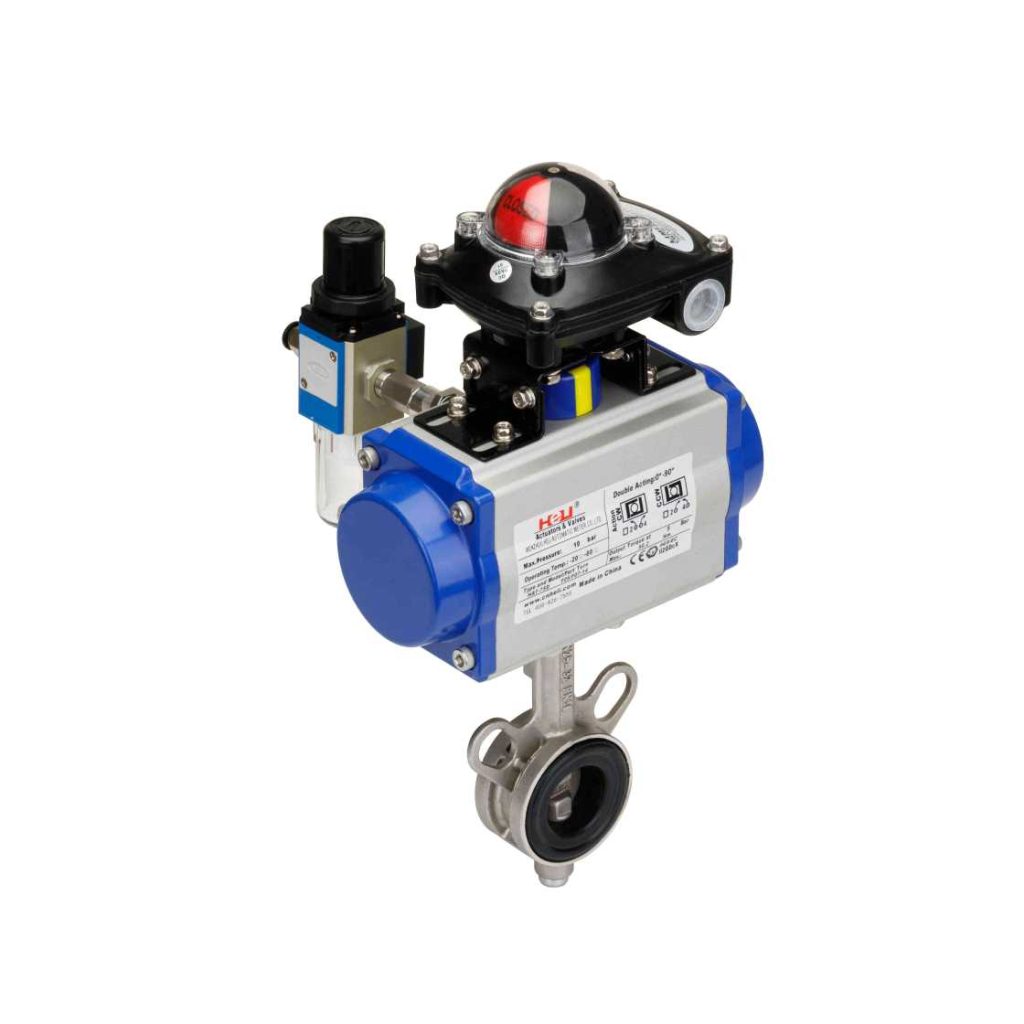
A pneumatic butterfly valve consists of a circular disc (the butterfly) that rotates around a central axis inside the valve body to control fluid flow. The term “butterfly” comes from the shape of the disc, which resembles the wings of a butterfly. The valve’s actuator is powered by compressed air, which drives the disc to open or close the valve. The compressed air is supplied to a pneumatic actuator, which either opens or closes the valve based on the control signals. Working Principle of Pneumatic Butterfly Valve The working principle of a pneumatic butterfly valve is based on the rotation of the disc to regulate the flow of fluid. When the valve is in the closed position, the disc is perpendicular to the flow direction, blocking the passage of fluid. When the actuator rotates the disc by 90 degrees, it opens the valve, allowing fluid to flow through the passage.