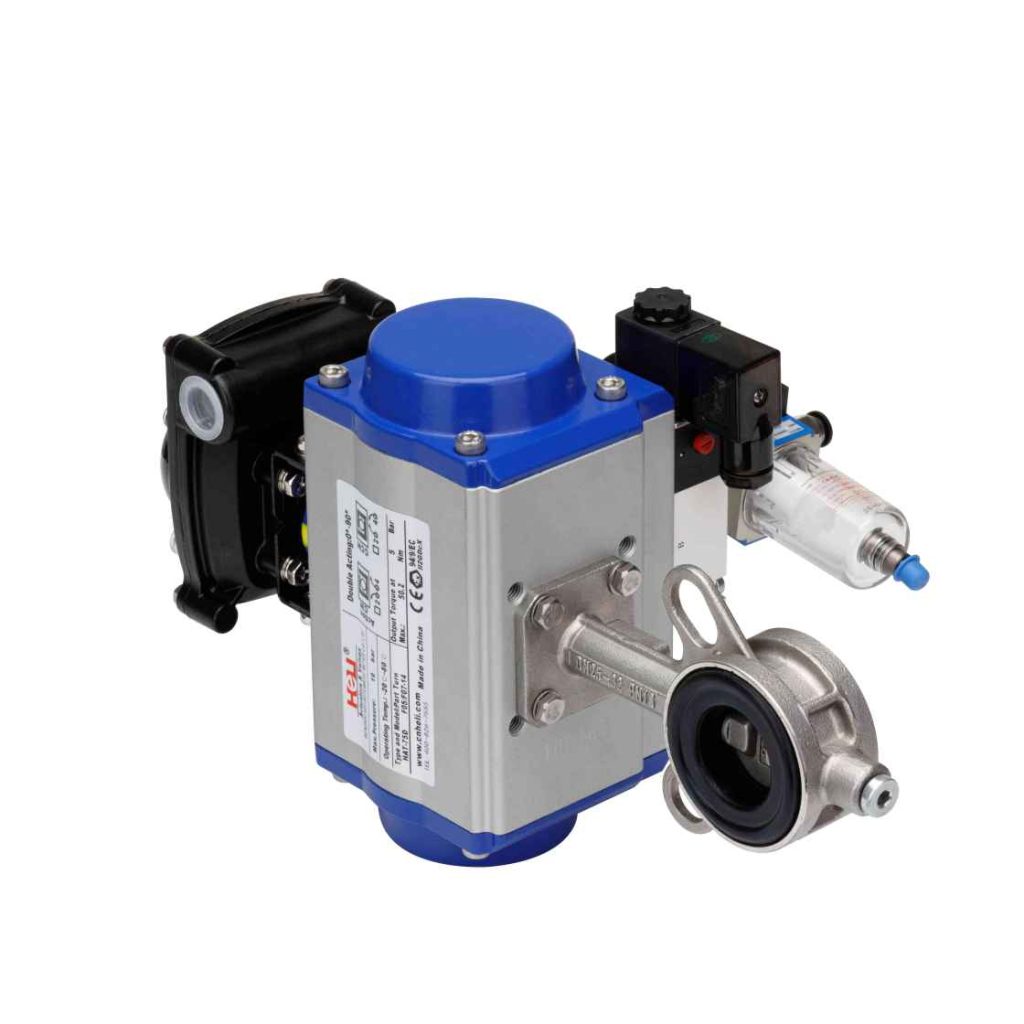
Pneumatic butterfly valves are widely used in fluid control systems due to their efficient operation, ease of maintenance, and cost-effectiveness. These valves are primarily employed to regulate or isolate the flow of liquids, gases, or slurry in pipelines. The unique design of pneumatic butterfly valves, combined with the use of pneumatic actuators, makes them an essential choice for a wide range of industries, including water treatment, chemical processing, oil and gas, and HVAC systems. This article explores the working principle, advantages, applications, and maintenance considerations of pneumatic butterfly valves.
Working Principle of Pneumatic Butterfly Valve
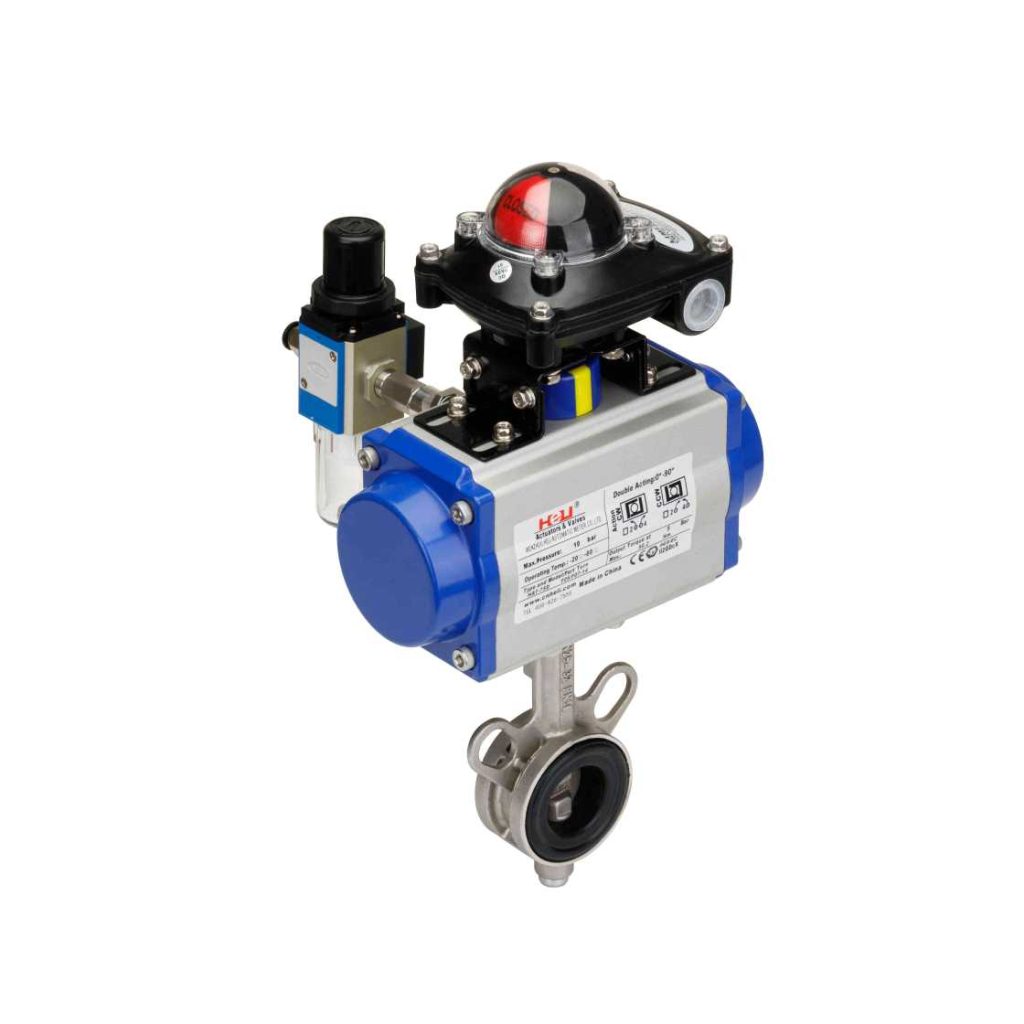
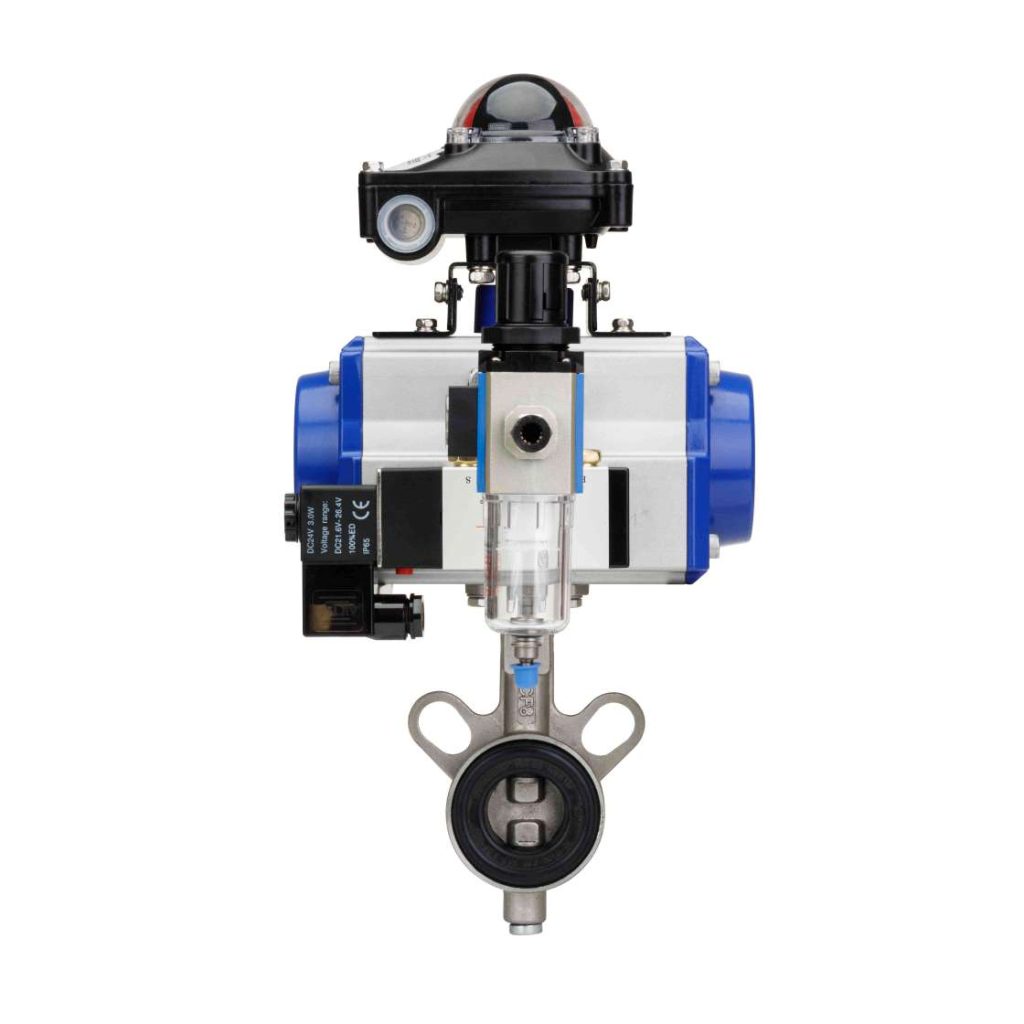
A pneumatic butterfly valve consists of a circular disc (the “butterfly”) that is mounted on a rotating shaft. The valve operates by rotating the butterfly disc either perpendicular or parallel to the flow direction of the media, thereby regulating or completely shutting off the flow. When the disc is positioned parallel to the flow, the valve is fully open, allowing the fluid to pass through. When the disc rotates to a perpendicular position, the flow is blocked, effectively closing the valve. The pneumatic actuator, which is powered by compressed air, controls the rotation of the valve. By applying air pressure to the actuator, the valve can be opened or closed swiftly. This actuation system provides precise control and ensures fast response times, making pneumatic butterfly valves highly suitable for applications where rapid valve movement is essential.